Showing posts with label obits. Show all posts

1.08.2025

memories of my niece eva

Eva Kaminker Andres was one of the very best people I have ever known. Remembering Eva, it's difficult not to be effusive. You might think I am exaggerating. I assure you, I am not.

Eva was an extremely caring and loving person. She was completely focused, completely present. She and Tim lived their values in a way that few people ever do, living a life focused on love, friendship, community, spirituality, and a connection to the natural world, a life intentionally not filled with consumerism and the quest for material goods, a life without professional pressures, one turned away from the noise of the mainstream world. 

They shared a beautiful small home, in a tiny, remote town on California's "lost coast," living a simple life. When I visited them in 2022, we shared a laugh over their kitchen goods: only a few plates, mason jars for glasses, but an expensive, high-tech kettle to bring the water to the exact, correct heat for their fancy French press. Because what's really important in life? Coffee!

We ate breakfast on their tiny balcony, looking out onto the wild beauty of the mountains and listening to the surf. Eva told me that every night after dinner, they watch the sun set on the ocean. We walked across the road and down a few feet -- not even a five-minute walk -- and settled in to their spot to take in the beauty. 

By saying that Eva was intensely spiritual, caring, and present, I don't mean to portray her as saccharine or prim. She had a sharp sense of humour and could surprise you with hilarious, biting observations. She laughed a lot, because she found great joy and also great hilarity in the world.

Eva was never preachy or showy or militant about her life choices. I marvelled at her ability to meet people wherever they were. Eva was the embodiment of the expression be the change you wish to see in the world. She had been an activist for a while when she was younger, but gave that up. I sensed that choice was connected to her Buddhist spirituality, but we never talked about it explicitly. She knew I was an activist, and she was always interested what I had going on. I hope I was always as positive about her life choices as she was about mine. I learned a lot about acceptance from Eva. You don't have to understand everyone. You only have to accept them as they are.

* * * *

Eva and I had a special bond. We were both the youngest in our families, and both chose life paths that were outside family expectations and perhaps not always understood. We both chose not to have children.

She lived in Auroville for a time, an intentional community in the south of India, and traveled alone in India for an extended period of time. 

She worked as a cook, feeding staff and visitors of the Spirit Rock Meditation Centre, and as a massage therapist. Eva was also an artist. She once traveled to a remote part of Maine to meet and spend time with a relative of my mother's who is an artist, just to connect.

* * * *

Eva grew up in New Jersey, and when she and her brothers were younger, Allan and I were the "cool aunt and uncle" across the river in New York City. We would hang out together, see grunge bands or musicians performing in coffee houses, and just walk around the city, poking around bookstores, record stores, maybe stopping in an art gallery, finding fun inexpensive places to eat. Eva really enjoyed that, and also liked going to the occasional baseball game with us.

I want to capture two NYC memories that we laughed about whenever we saw each other for years -- just the punchlines. One is the musician in the coffee house singing about The Big Toe. The other was the guy on his cell phone in Di Fara Pizza: "I'm in fucking Brooklyn! Eating pizza!" I was actually blogging already at that time! I wrote about it here.  

Our time together when we were younger formed a deep bond that lived on. When she was already living in California, she had some reason to be in New Jersey, and while she was on that side of the continent, visited us in Ontario -- twice. This was no small thing. It meant a lot. 

I'm so incredibly grateful that when I visited my Oregon family in 2022, I visited Eva and Tim in Shelter Cove. I had an incredibly beautiful six-hour drive, then spent two nights and a full day with them. (From there I drove down to the Bay Area and visited another nephew (one of Eva's brothers) and niece-in-law, and met my new grand-nephew.) 

That was the first time in many years that Eva and I spent quality, alone time together, and the only time I hung out with her and Tim alone. We had so much fun -- serious talks, tons of laughs, the incredible coastal beauty. We had dinner with some of Tim's family who lives nearby, and they welcomed me as family in the warmest, most genuine way. Most importantly, I saw Eva and Tim -- their beautiful partnership, their boundless love for each other.

Tim was much older than Eva, actually a couple of years older than her father (my brother). This raised eyebrows, of course, as did Tim's unconventional life. But would Eva ever have chosen a conventional person as her partner? Spending time with Eva and Tim, I saw the deep love they shared, the world they created and inhabited together, and I was so happy for them. I also shared these observations with my mother, and it brought her a lot of joy, too. 

* * * *

Eva was always lovely and attractive, but as she got older, she really came into her own beauty and style. She had warm, deep brown eyes, a big, bright smile, and gorgeous, thick, brown hair. She didn't wear makeup (as far as I know) and always looked slim and physically fit. I picture her in jeans and boots, a cotton tee or a plaid flannel shirt, or at a family function, in a simple dress and a colourful scarf, looking both totally natural and totally elegant.

* * * *

The last time I saw Eva was in late June of 2024. My brother and sister-in-law had just moved our mother into an assisted living facility, and we were helping sort through her things. My mother wanted us to take anything of hers we wanted; it made her happy to know that some of her possessions would continue to be valued, and that her children and grandchildren would enjoy and benefit from them. 

Eva took some furniture. My brother helped her tie it down in the bed of her truck. We hugged and said I love you. Then I watched her drive off in her truck, smiling and happy, on her way back to home, California, and Tim.

8.22.2024

lee zaslofsky, rest in power

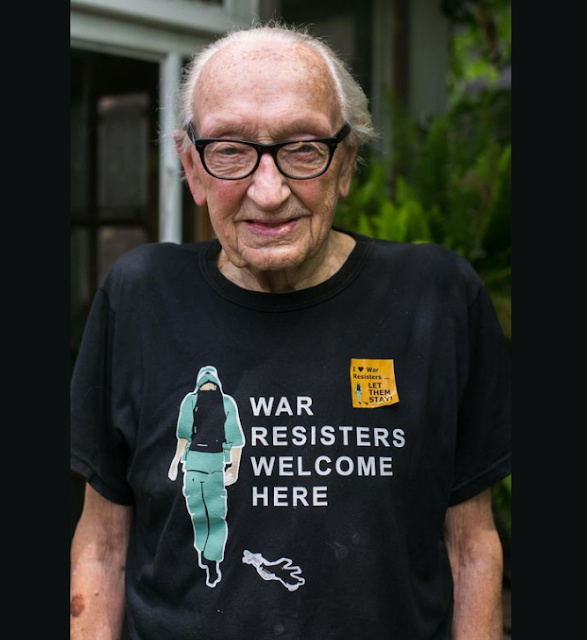
This week I learned that a friend and comrade from my Toronto days has died: Lee Zaslofksy. 

Lee was a leader in the War Resisters Support Campaign, supporting men and women who refused to participate in the invasion and occupation of Iraq. For a long time, Lee was the coordinator of the network as it found housing, funds, employment, and community for war resisters coming to Canada. But "coordinator" is a shallow title that doesn't convey what Lee did; his work was much deeper and broader than coordination. Lee supplied friendship and community. He gave of himself. He showed up. He loved.

When you're involved in high-stakes activism, where your work has serious impacts on people lives, people form powerful bonds. You might know very little about someone's background or their day-to-day life, discovering bits of their story as time goes on. Sometimes you might not see or speak with each other in between meetings. Other times you'll speak five times a day. Activist comrades occupy a unique space in your life, different from an ordinary friendship. The passion of your commitment, the depth of your belief, your shared desire to move your cause forward, your deep respect for each other, creates a love that I am grateful to have experienced, more than once in my life. 

Through the War Resisters Support Campaign, I worked with people that I feel incredibly fortunate to have known, so lucky that my life intersected with theirs.

Lee was one of those people to me. Lee will always be on my list of people I am so grateful and fortunate to have known. 

I recall that we didn't always agree on everything, and sometimes differed in our visions of how to move our great project forward. We would become very heated and passionate. I recall him banging the table for emphasis -- and the next time he saw me, hugging me tightly.

Lee was a Vietnam War deserter. He had been a home healthcare aide. He had been a staffer in Jack Layton's office, when Jack was on the Toronto city council. He loved the country of Vietnam, and visited as often as he could, for long periods of time, and had boyfriends there. He was born in Brooklyn, and became a Canadian citizen as soon as he was eligible (as did I).

That might be the sum-total of what I knew about Lee's biography. But I knew much more important things: his principles, his passion for justice, his belief in human potential. His crazy sense of humour, that might elicit anything from an eye-roll to hilarity. The love that poured from him.

His death has hit us all so hard -- all the "resisters and campaigners," we used to say. Now a loose collection of people scattered around North America and beyond, some of us in touch on social media, others not at all, but our bond endures. 

Lee Zaslofsky, rest in power, my friend.

8.18.2023

rip robbie robertson

The news that Robbie Robertson died hit me hard. Although he's not the last surviving member of The Band (Garth Hudson recently turned 86), he was my last surviving deep connection to music that is so close to my heart. 

I rarely feel a famous person's death in a personal way. Usually I think that's sad or what a shame, they were so young or I know they were sick for a long time. Thoughts, not feelings. I could compare this to how I feel when an acquaintance I only know briefly loses a family member. It's sad, and I care, but I'm not affected emotionally. 

Once in a while, I can honestly say that the death of a famous person has brought me grief. This was one of those times. 

It also makes me think of times like this -- which will be much worse, much deeper -- that lie ahead. The deaths of a generation of musicians who had huge cultural impacts has already started. A few whose deaths I will genuinely grieve are on the horizon.

To put down in pixels what Robbie Robertson, Rick Danko, The Band, and "The Last Waltz" have meant to me through the years somehow reduces it to cliche. The film, especially, weaves its way through my life, from skipping school to see it at Radio City Music Hall (twice!) in 1978, to introducing Allan to it in the 1980s, when it quickly became a touchstone of a shared love, to first buying the soundtrack on LP and then on DVD. I know every frame of that movie, every moment. I've obsessed on every shot and every note.

I don't even want to attempt to explain this. Anything I could write would be a cheap imitation, a fifth-generation photocopy, a lifeless cliche. It would reduce something profound into mere words. 

I love to read and think about art -- books, film, paintings, architecture, all of it. But at the same time, all my life I've shied away from too much analysis, too much intellectualizing, about the art that means the most to me. I experience the art that I love best in a place that has no words.*

Robbie's music brought great joy to my life, and also meaning. I love that later in life, he openly embraced his Indigenous heritage. He was a great-looking man at every age. And his music, well, it will always be alive for me.

There are some famous people who, even though you've never met them (or if you did, you were a handshake or an autograph among millions), you truly feel they are part of your life. Almost like an extended family, in that their presence feels so real to you. Robbie Robertson was one of those people for me.


* I recently read two books that explore, among other things, how art makes us feel: The Violin Conspiracy by Brendan Slocumb and The Goldfinch by Donna Tartt.

6.16.2023

rip cormac mccarthy: an indelible impression, for better or worse

The recent death of Cormac McCarthy has me thinking about his dark genius, and my contrary views of his best (and worst) writing.

I know exactly when and how I discovered McCarthy. In the early 1990s, I was volunteering, and later teaching, at a New York City youth centre called The Door. Another teacher there was reading All The Pretty Horses, which had just been published. The teacher, who was also an artist, named McCarthy as his favourite writer. It was a rave review, and I picked up the book.

The beauty of the language stunned me. In those days I read mostly fiction, and I hadn't come across any contempotary fiction that sounded like this -- spare, rhythmic, majestic, dark, brutal, unstinting in both violence and beauty. I heard echoes of Faulkner, but brought into a new world: Faulkner as McCarthy's literary grandfather. 

Saul Bellow, another of my touchstones at the time, wrote of McCarthy's "absolutely overpowering use of language, his life-giving and death-dealing sentences". Reading McCarthy, I found myself re-reading certain sentences, saying them aloud, turning over the words, savoring and marveling at the beauty -- as I do when I read Shakespeare. 

I went back to McCarthy's earlier work, and read Blood Meridian, Child of God, and Suttree, then bought and read The Crossing (1994) and Cities of the Plain (1998) as soon as they came out. Along with All The Pretty Horses, this is the Border Trilogy, a masterpiece of American fiction. 

There are a few scenes in The Crossing, and one scene in particular, that I have never forgotten -- although I wish I could. Reading it hurt physically, a pain my chest like a heartbreak. To this day, it hurts to think about. I loved these books, but I hated the terrible pictures they put in my head. It's through McCarthy that I discovered that violence against animals is the one thing I cannot read about.

Then McCarthy stopped publishing for a while, and I forgot that he used to be one of my favourite writers.

Then came the two books that are said to be his masterpieces: No Country for Old Men (2005) and The Road (2006). I tried them both and could. not. read. them. The writing seemed like self-parody, the creepy darkness an overdone gimmick. It was if McCarthy decided to write a McCarthyesque novel. You want dark? I'll give you dark. You want gothic? I'll out gothic the gothic. I'll push all the Cormac McCarthy buttons, string them all together, and vomit the results onto the page. The critical raves baffle me. 

I'm sad that these are his most famous works, and also mystified that they are considered his best. I may re-read the Border Trilogy to recall the tremendous beauty of his writing. It can't hurt any more than it already does.

5.25.2023

tina turner, rest in power


She was a force of nature. A powerhouse. She had many lives, transcending all of the usual music-industry categories. We will all miss her. 

Allan has a really nice tribute to her, with some great clips: here.

3.18.2023

judy heumann, rest in power

Judith Heumann, one of the founders and primary movers of the disability rights movement, died recently at the too-young age of 75. 

Judith Heumann was a force of nature. She was the consummate activist -- a brilliant communicator, a charismatic organizer, and a warm, compassionate, attentive person. Judy was the kind of person that made you want to do more, to be better. 

She is one of the leads in "Crip Camp," the brilliant documentary about a summer camp experience that radicalized a group of young people with disabilities, and became an incubator of the disability rights movement. If you haven't seen it, I hope you will. 

At the very beginning of my foray into the disability rights movement, I attended an event where Judy was speaking. I don't remember much about it -- we're talking 35 years ago -- but I remember being riveted as Judy spoke. She gave me so much clarity about the intersection of feminism, human rights, and disability rights -- that indeed they were all the same thing. 

Here are some obits: The New York Times, NPR, The Guardian. Judith's own website is here.

The headline from the NPR obit is "Activist Judy Heumann led a reimagining of what it means to be disabled". 


2.05.2023

rip russell banks: a belated tribute

I was very sorry to hear that Russell Banks, one of my favourite contemporary writers, died on January 7 of this year. 

There's a very short list of authors that are must-reads for me; I'll read anything they publish. Banks was on that list. 

Banks wrote about very ordinary people, always working-class, often marginalized and powerless. Although his egalitarian worldview was always obvious to me, he never used his characters as billboards or soapboxes. This excerpt from Banks' obituary in The New York Times is very apt.

In much of Mr. Banks’s writing, his concerns about race, class and power repeatedly surfaced, with particular attention given to the powerless and the overlooked, especially his outwardly unremarkable blue-collar characters.

“There’s an important tradition in American writing, going back to Mark Twain and forward to Raymond Carver and Grace Paley, whose work is generated by love of people who are scorned and derided,” Mr. Banks told The Guardian in 2000. “I have an almost simple-minded affection for them. My readers are not the same as my characters, as I’m very aware. So I’m glad when they feel that affection too.”

I was turned on to Russell Banks by one of my nephews, back in the 1990s: he told me about Rule of the Bone, Banks' take on the classic theme of a personal struggle between two father figures. I loved the authentic voice of the teenage narrator, and the pointed echoes to the ultimate alternative-father story, The Adventures of Huckleberry Finn. I read Rule of the Bone decades ago and can still recall scenes and images from it.

Banks' masterpiece is Cloudsplitter, his massive and powerful novel about the radical abolitionist John Brown. This book, along with the PBS "American Experience" documentary, in which Banks was featured, gave me an enduring fascination with Brown. (I was always sorry that I didn't know about the John Brown historic site, all the many times we drove upstate New York and to Vermont.) 

I also loved these books by Banks: Continental Drift (1985), Affliction (1989), and especially Lost Memory of Skin (2011). I haven't read all of Banks' novels, and haven't read any of his nonfiction, but I think I will eventually fill in the gaps. I'm sorry we won't have anything new from Banks. I hope he knew how much his readers loved him.

9.26.2022

barbara ehrenreich, rest in power. i will miss you.

I was very saddened by the news that Barbara Ehrenreich had died earlier this month. She was one of my favourite thinkers and writers, and I found it difficult to bundle my thoughts and feelings into a tribute. 

From her last book, Natural Causes: An Epidemic of Wellness, the Certainty of Dying, and Killing Ourselves to Live Longer, I know she rejected continuing with  cancer treatment after a certain point, so it was good to see that she died while in hospice care.

Why did Ehrenreich's writing mean so much to me?

She was a fierce champion of the working class.

She was fearless in her research and her writing.

She was a steadfast feminist, always examining the impact of policies and trends on women, especially working-class and low-income women.

She was clear-eyed and unrepentent. Ehrenreich's essay on the 2000 US election, "Vote For Nader," was widely shared. Then her post-election "Don't Blame Me", in Time magazine, strengthened my admiration for her. 

So many supposedly leftist writers will spend 1,500 words explaining why the Democrats suck, why the two-party system is broken, why we need a new or a different party -- then close with some version of "but that's all we got, so just shut up and vote for them". Ehrenreich understood a more complex picture.

I know there's not much point arguing with a party spurned. Scapegoating is, after all, so much easier than thinking. But, dear disappointed Dems, why not vent your rage on, for example, the union guys who voted for Bush because of his easygoing attitude toward firearms? (Oh, yes, I forgot, they're armed.) And before beating up on the Democratic defectors to Nader, wouldn't it be a good idea to pause for a little numerical perspective? According to exit polls, Gore lost 11 pecent of Democratic voters to Bush, compared to only 2 percent to Nader, who also drew votes from Independents and Republicans.

One of the major charges leveled against Nader voters is that we pretended - in some perverse kind of optical malingering - that we couldn't see the difference between the major candidates. Well, I'm capable of making fine visual distinctions. But a lot of people who probably never wandered near the Nader camp kept muttering, "Bush, Gore? Gush, Bore?" right up to election eve. This was, after all, the year the parties did their utmost to resemble one another. Recall that in August, after a Republican convention full of "compassion" and black gospel choirs, the pundits gave Bush high marks for making the Republican party look more like the Democratic party. But how hard was that? He wouldn't have been able to make the Republicans look like the Democrats if the Democrats had not already spent most of the past decade making themselves look like the Republicans - embracing capital punishment, unrestricted trade, welfare reform and the need to abolish the deficit. You call this a two-party system? I demand a recount.

. . . .

The staggering thing about the Democratic party's sense of entitlement - as in, "We own your vote" - is that it has made so little effort to hold on to its base. Labor, for example. Would there have been any worry about union members' defecting to Nader if the Clinton administration had spent even half as much time fighting to raise the minimum wage as it spent on pushing free trade with China?

So back off, Democratic avengers. Nader didn't steal Gore's election; he just mobilized some of the mounting disgust for money-polluted politics, with its battery-operated candidates and look-alike, corporate-welfare-state policies, whether they're labeled Democratic or Republican. All right, maybe the Republican disguise worked for the Democrats in 1992. But if you go around long enough in camouflage clothes, you're eventually going to be mistaken for, well, a bush.

What I loved best about Ehrenreich's writing was that she wrote for everyone. Although she was a columnist for The Nation, which was (before the internet) the preeminent left publication in the US, most of her writing had a broader target. She wanted to enlighten, educate, and also entertain, anyone who could read her. For me, this put her at the absolute top of the heap of feminist and socialist writers. 

A lifetime ago, I saw Ehrenreich read on a double bill with another great feminist writer, Katha Pollitt. When she signed my copy of The Worst Years of Our Lives: Irreverent Notes from a Decade of Greed, she said, "Hardcover! Bless you, supporting my family." Just a tiny personal memory from more than three decades of attention and admiration.

If you haven't read any of Ehrenreich's books, certainly begin with Nickel and Dimed: On (Not) Getting By In America, which has become a classic, then Bait and Switch: The (Futile) Pursuit of the American Dream, and Bright-Sided: How the Relentless Promotion of Positive Thinking has Undermined America.

Her obituary in The Guardian is here. Both this, and the obituary in The New York Times, recount the birth of the idea for Nickled and Dimed. 

Barbara Ehrenreich, I will miss your voice.

8.14.2022

bill russell, rest in power: a trailblazing activist

Basketball legend Bill Russell died this month at the age of 88. Although I remember his playing days, it's not Russell's incredible and indelible sports record that leads me to honour him. If you're not familiar with Russell's life as a trailblazing activist, this is an excellent history lesson; if you are, it's a heartfelt reminder. 

It's also a reminder of what Russell endured, playing for one of the US's most racist cities. I don't know if things have changed greatly for people of colour in Boston, but when Canadians talk about the US South as if racism was somehow confined there, I always think of Boston.

Among Pro Athletes, Bill Russell Was a Pioneering Activist

Russell marched with the Rev. Dr. Martin Luther King Jr., spoke out against segregation in Boston public schools and backed Muhammad Ali in his opposition to the Vietnam War.

It's easy to remember the shots that Bill Russell blocked or the N.B.A. championships he won. After all, there were so many of each that he is considered one of the greatest basketball players in history, and in some corners, the greatest, period.

But after his nearly nine decades of life, his most consequential legacy has less to do with the sport he dominated than his work off the court. From the time he was a young man to his death at age 88 on Sunday, Russell was a civil rights activist who consistently used his platform as a celebrity athlete to confront racism, no matter whom it alienated or what it did to his public popularity. And he was one of the first to do so.

Now, it is common for athletes across many sports to be outspoken, no doubt inspired by Russell. The N.B.A. players' union encourages its members to be passionate about their politics, especially around social justice. Without Russell's risking his own livelihood and enduring the cruelties he did as a Black player in the segregated Boston of the 1950s and 1960s, athlete activism would look much different today, if it existed at all.

From left: Bill Russell, Muhammad Ali, Jim Brown, Kareem Abdul-Jabbar (then Lew Alcindor)

"The blueprint was written by Russell," the Rev. Al Sharpton said in an interview on Sunday. He continued: "It is now trendy on social media to take a stand. He did it when it was not trendy. He set the trend."

Spike Lee, the director and longtime N.B.A. fan, said in a text message, "We are losing so many greats my head is spinning."

Lee said Russell "is right up there with Jackie Robinson as changing the game in sports and activism in the United States of America, and we are all better because of these champions."

Russell, a native of West Monroe, La., was a trailblazer from the moment he set foot on an N.B.A. court.

"My rookie year, in the championship series, I was the only Black player for both teams," Russell once quipped to an audience while accepting an award in Boston. "And see what we did, we showed them diversity works."

Russell marched with the Rev. Dr. Martin Luther King Jr. during the March on Washington for Jobs and Freedom in 1963 in the prime of his playing career (he played for the Celtics from 1956 to 1969). He was invited to sit onstage behind King, but he declined. That same year, Russell offered his public support for demonstrations against segregation in Boston public schools, and addressed Black students taking part in a sit-in.

When the civil rights leader Medgar Evers was assassinated, also in 1963, Russell contacted Evers's older brother, Charles, in Jackson, Miss., and offered his assistance. The elder Evers suggested that Russell run an integrated basketball camp in the Deep South, something that would have been a significant safety risk for Russell. He said yes, and despite the death threats, went through with the camp.

Four years later, when the boxer Muhammad Ali was faced with a torrent of criticism for refusing to fight in the Vietnam War, Russell, the N.F.L. star Jim Brown and Kareem Abdul-Jabbar (then known as Lew Alcindor and still playing at U.C.L.A.) gathered in Cleveland and decided to support Ali. This was not a popular stance, not that Russell cared.

Russell wrote immediately afterward that he was envious of Ali.

"He has absolute and sincere faith," Russell wrote for Sports Illustrated. "I'm not worried about Muhammad Ali. He is better equipped than anyone I know to withstand the trials in store for him. What I'm worried about is the rest of us."

Russell's activism made an impact on generations of athletes. That included Spencer Haywood, who played for Russell as a member of the Seattle SuperSonics, whom Russell coached for four seasons. (In 1966, Russell became the first Black coach in the N.B.A.)

Haywood said in an interview on Sunday that he and Russell would often dine at a Seattle restaurant called 13 Coins after road trips, and Russell would regale him with stories about the civil rights movement. During these dinners, Russell lauded the young player's willingness to sue the N.B.A. in 1971 for not allowing players to enter the league until four years after their high school graduation — a case that went to the U.S. Supreme Court and was eventually decided in Haywood's favor.

"He was teaching me because he knew what I had stood up for with my Supreme Court ruling," Haywood said. "And he admired that in me. And I was so overwhelmed by him knowing."

Haywood said his teammates would jokingly refer to Russell as Haywood's "daddy" because of how close they were. Sometimes, Haywood's late-night talks with Russell came with surprising advice about activism.

"He always used to tell me about not getting too carried away because we were in the '70s," Haywood recalled. "He was kind of guiding me, saying: 'Don't go out too far right now because you are a player and you need to play the game. But you've made one stand and you did great in that, but don't go too far.' He was, like, giving me a guardrail."

Russell never feared going too far as a player activist himself. He wasn't deterred by the racist taunts he absorbed at games, or when vandals broke into his home, spray-painted epithets on the wall and left feces on the bed after he moved his family to Reading, Mass. When he tried to move his family to a different house nearby, some residents of the mostly white neighborhood started a petition to keep him out.

"I said then that I wasn't scared of the kind of men who come in the dark of night," Russell wrote for Slam magazine in 2020. "The fact is, I've never found fear to be useful."

He didn't always have the support of his teammates. In 1961, for example, the Celtics traveled to Lexington, Ky., for an exhibition game against the St. Louis Hawks. When the restaurant at the hotel would not serve the team's Black players, Russell led a strike of the game. His white teammates played the game. Bob Cousy, one of Russell's white teammates, told the writer Gary M. Pomerantz decades later for the 2018 book "The Last Pass: Cousy, the Celtics and What Matters in the End" that he was "ashamed" at having taken part in the game. President Barack Obama cited the 1961 story in giving Russell the Presidential Medal of Freedom in 2011.

"For decades, Bill endured insults and vandalism, but never let it stop him from speaking up for what's right," Obama said in a statement Sunday. "I learned so much from the way he played, the way he coached, and the way he lived his life."

The activism didn't stop as Russell got older. In recent years, Russell has been a public supporter of the Black Lives Matter movement and Colin Kaepernick, the former N.F.L. quarterback who began kneeling during the national anthem to protest police brutality in 2016.

"Bill Russell was a pioneer," Etan Thomas, a former N.B.A. player and political activist, said in a text message Sunday. Thomas said Russell was "an athlete who used his position and platform to stand up for a bigger cause." He added that "he was the type of athlete I wanted to be like when I grew up."

Russell's influence in leading the 1961 strike could be felt in 2020, when the Milwaukee Bucks refused to play a playoff game as a protest of police brutality. On Twitter, Russell wrote that he was "moved by all the N.B.A. players for standing up for what is right." In a piece for The Players' Tribune weeks later, Russell wrote, "Black and Brown people are still fighting for justice, racists still hold the highest offices in the land."

Sharpton pointed to those actions as Russell’s legacy.

"He did it before some of these guys were born," Sharpton said. "And I think that what they need to understand is every time a basketball player or athlete puts a T-shirt on saying something about Trayvon or 'I Am Trayvon' or 'Black Lives Matter' or whatever they want to do — 'Get your knee off my neck!' — they may not know it, but they are doing the Bill Russell."

Sopan Deb is a basketball writer and a contributor to the Culture section. Before joining The Times, he covered Donald J. Trump's presidential campaign for CBS News. He is also a New York-based comedian. @sopandeb

Also: "The Bill Russell I Knew For 60 Years," by Kareem Abdul-Jabbar 

2.27.2022

frank showler: called to be faithful


Frank Showler, born in 1919, died last week at the age of 102. 

Frank was a foundational figure in the social-justice activist community, seemingly participating in every demonstration, rally, vigil, and campaign. It was a universal saying: It's not a demo until Frank shows up. And show up he did, to an astonishing degree.

Frank didn't just show up for causes. He showed up for people. He was one of the warmest, most generous, compassionate people I have ever met. Although everyone around me had known each other for many years, and I was a newcomer, Frank made me feel like an old friend. To Frank, no one was an outsider.

I met Frank through the War Resisters Support Campaign, which fought for the right of former soldiers who refused to participate in the invasion and occupation of Iraq to remain legally in Canada. I am incredibly fortunate that my path intersected with Frank's. The years of our friendship were but a small portion of his long life, but a treasured part of mine, a part of great value. (I feel this way about all my war resister campaign friends.) 

Frank was a World War II war resister. For refusing to fight, he was arrested and sentenced to a series of work camps. When he was assigned alternative service working in a hospital, he organized the low-wage orderlies.

Doing refugee work in South America, Frank met Isabel, the beginning of a lifelong partnership in love and in movements. By the time I met Frank, Isabel had already died. But most people knew them as Frank and Isabel, inseparable.

Long ago, I wrote about an event Allan and I attended in Toronto, called "I Object: Three Generations of War Resisters Speak Out" (post is here; comments are missing). Although I am an atheist to my core, I will never forget something Frank said that night: War is contrary to the mind of Christ. A minister with the United Church, pacifist at the time, told him that. The church changed its unpopular stance, but Frank said he saw no evidence that Jesus had changed his mind. 

If you asked Frank, how do you keep going -- bearing witness, protecting the weak, fighting for the disenfranchised, speaking out against war -- when the problems are so huge, and the powers are so great, he would reply: We are not necessarily called to be successful. We are called to be faithful.

Although I do not have religious faith, I hear this as a call to live our values. Something to always strike for, however imperfect our efforts.

Yesterday I attended a Quaker meeting (on Zoom) that was a memorial to Frank Showler. Everyone who spoke told the same type of stories. It was clear how deeply he will be missed. I encourage you to take some time and scroll through some of these Facebook posts memorializing him.

I was incredibly fortunate to know Frank, and I will miss him. 

Frank Showler, ¡Presente!

1.30.2022

memories of great-aunt betty

An important family matriarch passed away this week, at the age of 96. Betty MacDowell was my partner Allan's great-aunt, his father's mother's sister. She was one of the warmest, kindest, most good-hearted people I've ever known, and I wanted to share a few memories and write a little tribute to her.

I first met Betty in 1990, when we were visiting Vermont, where Allan grew up. Betty invited us over for a family dinner, along with Mary (her sister, Allan's grandmother), her son and daughter-in-law (Allan's cousins), and their children, who were then little kids. 

This dinner is memorable for me for several reasons. 

Although Allan and I met in the summer of 1985, and we had been living together since January 1987, this was the first time I had met these folks, and it was the first time Allan had seen them in many years. At that time, Allan had no active relationships with any of his family except with his grandmother. Although we didn't know it at the time, this dinner was the beginning of Allan slowly re-connecting with his family.

The table was overflowing with fresh, homemade food. For dessert there was a berry pie made with berries Betty had picked from her garden that morning. I felt like a Fresh Air Fund child, simply agog that such a thing was possible. (Betty's pies were amazing; they are even mentioned in her obituary.)

Everyone was very nice and friendly, but Betty was especially warm and welcoming, and I sensed she had made a special effort to include us. I was really touched, and I wrote her a thank-you note (sent in the mail, the only way one could send a note in those days). I said that she had treated both of us like family, and it meant a lot to me.

She wrote back, in her perfect schoolteacher handwriting, and said, You are family -- the word "are" was underlined twice -- and you will always be welcome in my home.

After that, we visited Betty whenever we were in Vermont, sometimes staying in her spare bedroom or in a trailer outside her neat and cozy home. She lived on land that was once part of her family's farm, across a wide yard from the log-cabin home her son and daughter-in-law built, where they raised their family and still live. (The yard now contains solar-energy cells.) It's a beautiful, peaceful area, and it eventually figured into my desire to live someplace quieter and more beautiful.

Somewhere along the way, Betty and I started corresponding by mail. As a child and teenager, I used to write letters with my Aunt Lillian (who was also my great-aunt, my grandmother's sister), and writing to Betty recalled that for me. (I'm looking forward to continuing this personal tradition with my grand-niece, now six years old.) 

At some point Betty discovered digital photography and started making and selling her own greeting cards. I looked forward to seeing beautiful flowers from her garden, or some outdoor scene, along with her news. She would catch us up on the extended family, tell us about the weather in northern Vermont (snow country), whether a bear had visited her garden, whatever was new in her world.

One thing Betty and I had in common was a love of travel. She had travelled all over the world. When we visited, I loved hearing memories of snorkeling the Great Barrier Reef or camping out in some scenic location. She also shared many memories of growing up on a farm, especially sugaring. This was totally different than the urban backgrounds of my own relatives. For me it was a window into another world.  

I have no idea about Betty's politics or religious views. I mention this because it's very different from my original family. Brooklyn Jewish folks? You always know their opinions! I came to appreciate and respect the less vocal, more private demeanors of the rural Vermonters. I do know Betty was an extremely kind, accepting person. I cannot imagine a judgemental or bigoted word coming from her. 

I remember two little exchanges along those lines. Once, on a Vermont visit when we were already planning to emigrate to Canada, I mentioned that some people had been quite negative about our choice. Betty said immediately and quite sharply, "That's not their business!". Many years later, during the Trump years, she wrote in a letter, "You and Allan made a very smart decision to leave the US." She said something similar to me the last time we were in Vermont.

Betty lived a rich, full life -- rich with the love of family and friends, full with experience. She was very close with her children, children-in-law, and grandchildren, and in the last months of her life, was able to meet her great-grandchild. She died peacefully with family by her side. 

We were supposed to visit Oregon and California in 2020, then Vermont and Massachusetts in 2021. Covid pushed everything off by at least one year, so we didn't make that second trip. I'm sorry that we weren't able to see Betty again, but I'm very glad we visited the Vermont family in 2017 (both of us) and 2018 (Allan only) before we moved west.

You can see her obituary here.

1.13.2022

sidney poitier, rest in power

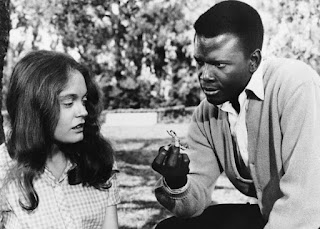
Sidney Poitier was one of my favourite actors. He starred in two of my favourite movies that I watched as a child: "A Patch of Blue" and "To Sir, With Love". Of course I loved him in "Guess Who's Coming to Dinner," "A Raisin in the Sun," and "Lilies of the Field", but it was those two early films that imprinted him in my heart.

Both those early movies led me to books, and I watched and read both, several times. 

I have a personal memory connected to Patch of Blue. The story revolves around the friendship between a Black man, played by Poitier, and a young woman who is white -- and blind. Selina is isolated and uneducated; she lives with her drunk, abusive grandfather and her mother, who is a sex worker. Through a chance meeting, the two become great friends and fall in love. Of couse Selina doesn't know that her friend is Black. Their friendship, let alone their love, is forbidden.

When I was 10, I spent the summer with my grandparents and great-aunts in Brooklyn. They were wonderful to me and I have only happy memories of them. They were also horribly racist. One night I watched A Patch of Blue on TV, not for the first time, and was telling them about it. They thought the movie was very sad, because "they loved each other but could never be together". I said, "Because he was so much older than her." They all gasped in horror, and fell all over each other correcting me, "No! They can't be together because he's a Negro!" They were genuinely concerned that I didn't understand this very important life lesson.

A Patch of Blue is about racism, about the unnecessary cruelty that keeps these two good people apart. But to my relatives, the movie was a tale of star-crossed lovers: how sad that she fell in love with a Negro and didn't realize it. Not how unjust and ridiculous it was that these two people should be apart. I always associate the movie with that conversation; I look back on it with amusement.

(A Patch of Blue was also part of the beginning of my interest in disability, along with a children's book called Follow My Leader about a boy who is blinded and his guide dog.)

I loved A Patch of Blue, but when I saw To Sir, With Love, I fell in love with Sidney Poitier. He was a great actor, a steadfast activist, and an incredibly important figure in film. I'm thinking a Sidney Poitier film fest in chez Kaminker-Wood is in order.

9.01.2021

ed asner, rest in power

People of my generation loved Ed Asner for his portrayal of Lou Grant on "The Mary Tyler Moore Show", and Allan and I both remember enjoying the spinoff "Lou Grant".*

But in my home, Ed Asner was admired for more than his canny character acting. Asner was a union man. He was president of the actors' union, a visible and vocal supporter of the United Farm Workers, and an outspoken critic of the brutal Reagan regime. With Ralph Waite, Asner co-founded a group of actors that supported human rights issues in El Salvador, where the US was lethally meddling at the time. It is widely believed that Asner's outspoken activism led to the cancellation of the popular, Emmy Award-winning "Lou Grant," and that he was blacklisted from the entertainment business for many years.

In Ed Asner, American Socialist, The Nation's John Nichols writes:
"When we can discuss socialism rationally. It will be as if a heavy curtain has been lifted from man’s eyes.” Those were not the words of Karl Marx or Eugene Victor Debs, though either of those radical thinkers might well have uttered them.
Those were the words of Ed Asner, the actor who became a household name in the role of gruff but lovable Lou Grant, the boss at a TV station, in the 1970s TV comedy The Mary Tyler Moore Show. He then carried the character over, with a new job as a Los Angeles newspaper editor, to one of the most socially conscious programs in the history of television, the eponymous Lou Grant of the late 1970s and early ’80s. 
When he died Sunday, at age 91, after a storied career that included multiple runs on Broadway, dozens of TV and movie roles, and even a star turn as the voice of Carl Fredricksen in the Academy Award–winning 2009 film Up, the Associated Press obituary described Asner as a “liberal.” Asner chose more robust language. A self-proclaimed “old-time lefty,” he proudly embraced the label “socialist” at a time when many of the most radical people in public life avoided it.
This 1982 profile from the Washington Post is a great read: "The Actor as Activist". It closes with this.
Yesterday he announced that he and his colleagues in entertainment would play an increasingly active role in political matters, that they have no expertise, it's true, but "we are all American citizens and our visibility gives us a special responsibility."

And does he think that in the process they're losing their identities as actors? "I hope to furbish my identity as a concerned human being," Asner said. "If it costs the actor, then so be it."

With Dennis Weaver, 1978

Eastern Airlines strike, 1989

With Cesar Chavez


* "Sopranos" fans might want to check out a young Nancy Marchand, whose character Mrs. Pynchon was modeled after Katharine Graham, owner of the Washington Post.

8.25.2021

chuck close, rest in peace

The artist Chuck Close died last week at the age of 81. He was an incredibly talented artist, a progressive thinker, and a diehard New Yorker who was often seen around town, especially in museums and galleries.

I had the good fortune to interview Close at his studio in 1998. I saw a few paintings in progress, and had a glass of wine with him. The interview was for a cover story for New Mobility magazine, and at that point, a highlight of my writing career.

My interview with Close is notable, in my mind, for a foolish gaffe I made in the published story. Close said something off the record, then talked for a very long time, and I assumed the off-record part was very brief -- turns out it was the whole long story. 

He was gracious about it towards me, but furious at the magazine who allowed the story to run without checking with him first. The online edition was edited, but in 1998, print was still ascendant in the magazine world. 

The quote caused Close no small embarrassment, and of course I was embarrassed, too. But I was also secretly pleased that I was able to include an unvarnished truth that the subject preferred withheld. 

If you're interested, here's the story. 


goodbye charlie watts

Charlie Watts was the greatest rock and roll drummer of all time. He's the reason the Stones' music has so much swing, why it skips and chugs and rolls and flies, where so much rock merely clumps and plods. His playing was always described as propulsive.  

And of course Charlie was known for his deadpan style, his bemused, unflappable demeanour. He always talked about hating touring, but loving playing with the band, the central, unresolvable dilemma of his life. I love how he always mentioned his fascination with jazz.

Everyone jokes about how Keith Richards will outlive us all. But one by one, the original members of the Rolling Stones will die, and I will be gutted, every time.


4.03.2021

beverly cleary, rest in peace, and thank you

Beverly Cleary, who died last week at the astounding age of 104, was a pivotal figure in the world of children's literature. Her books are treasures; her influence can scarcely be measured.

Cleary was one of the first authors to feature young characters who were realistically imperfect. If she was not the first, then certainly she was the first popular, widely-read writer who, as The Atlantic put it, "saw children as they are". 

Before Henry Huggins and Ramona, before Otis and Ellen and Ralph S. Mouse, children's literature was preachy and moralistic. The sanitized characters bore little resemblance to actual children. Books typically stood above children, and spoke at them. Cleary's books stood beside children and reflected them. 

Cleary's books were among the first that respected children -- their intelligence, their experiences. This would become the norm, of course, but it started somewhere, and that somewhere is Beverly Cleary. 

From a tribute (not the obit) in The New York Times:

The much-adored author of 42 books for children, who was declared a "Living Legend" by the Library of Congress in 2000, died on Thursday at the age of 104.

To borrow a response from Cleary's most famous character, Ramona Quimby: "Guts! Guts! Guts!" What else is there to say?

Cleary's novels — "The Mouse and the Motorcycle," "Henry and Ribsy" and "Ralph S. Mouse," just to name a few — are now in the hands of a third generation of readers. Her books are a cornerstone of modern children's literature, front and center in the bedtime canon, and among the first that many young children enjoy on their own. She was the recipient of every accolade available to authors of books for young readers — from the Newbery Medal to the National Book Award — and will remain alive in the imagination of every child who met Ramona and Beezus Quimby, Henry Huggins, Otis Spofford, Ellen Tebbits or any one of her dear, flawed, funny characters, and thought: "That's me."

I also loved this context for Cleary's most popular character, Ramona. 

One could argue that Ramona was the forerunner of what is now known as "girl power." Before Junie B. Jones and Ivy and Bean arrived on bookshelves, before words like "fierce" and "boss" migrated from zoos and office parks onto girls' T-shirts, she was strutting around with her hands on her hips, signing her name with a flourish — whiskers, pointy ears and a tail on the Q. No heart over the "i" for this girl.

"She was not a slowpoke grown-up," Cleary wrote in "Ramona and Her Mother". "She was a girl who could not wait. Life was so interesting she had to find out what happened next."

Right now I happen to be reading a biography of Louise Fitzhugh, who created the prototype of girl power for my generation, and many to follow. Harriet the Spy was published in 1964, Beezus and Ramona in 1955. I think Fitzhugh must have been influenced by Cleary... but I'll find out. 

Many women cite Nancy Drew as a character that inspired them, and certainly series like the Nancy Drew and Hardy Boys mysteries gave children agency. But those characters are fantasies. Fantasies are useful and important, but they don't bring children recognition, a feeling of belonging, a comfort that they are not alone, that readers find from realistic depictions of lives and feelings.

From a 21st Century perspective, Cleary's books exhibit a seeming total absence of diversity. Every character is white, as was the custom of the day. But girls! Girls are front and centre. Girls have agency. Girls are the boss. At the time, this was diversity.

Henry Huggins was the first book I ever read. Naturally I read it many, many times. As you may know, the story involves a boy who finds a lost dog, so skinny that its ribs are showing, hence the name Henry gives the pup. 

Here's the part that is an indelible memory. The original owner shows up and insists the dog is his. He and Henry argue. They agree to let the dog decide, each person calling the dog, hoping the dog will choose him. The interloper uses the dog's original name, which of course Henry never knew. Unfair! Then Henry realizes he, too, can use the dog's old name... and Ribsy runs to him. Hurrah!

My family didn't have a dog yet, and I dreamed of finding a Ribsy and taking him home. Little did I know!

This 2011 interview with Cleary in The Atlantic is wonderful: "Beverly Cleary: 'I Just Wrote About Childhood as I Had Known It'".

The official Beverly Cleary website gives a great perspective on the characters she created.

Beverly Cleary, thank you, thank you, thank you!

11.14.2020

billy joe shaver, rest in peace, and in music

Many well-known rock and pop musicians have died lately, including Helen Reddy, Eddie Van Halen, and Jerry Jeff Walker. More names will be coming fast and furiously as the icons of the Boomer generation age. 

One such death came to the country and blues music communities recently, that of Billy Joe Shaver. 


Shaver's songwriting epitomized the outlaw-country ethic and apparently so did his life. He talked the talk and walked the walk. He was outlaw-country before the movement had a name.

Shaver wrote songs for Waylon Jennings, Kris Kristofferson, Johnny Cash, and Elvis Presley. On a 2007 country-gospel album, he sang duets with Cash, Kristofferson, and Tanya Tucker, backed by notables such as Randy Scruggs and Marty Stuart. In 2010, Willie Nelson called Shaver "the greatest living songwriter". In his younger days, he hung out with Townes Van Zandt -- and really, what more can you say?


Some 30 years ago, Allan and I attended the New Orleans Jazz Festival, which is not really a jazz festival, but a celebration of a huge spectrum of roots music, and New Orleans food and culture. (On the same trip, we drove all over the Mississippi Delta in search of old bluesman's birthplaces and graves, and hung out with Cajun dudes on the bayou, among other adventures.) 

Anyway, in the fairgrounds where Jazz Fest is held, there are stages and audiences of every size, from headliner acts with big horn sections and backup singers, to the most intimate acoustic styles. In what must have been the smallest "stage" of all, really just a couple of wood stumps and a tiny space of grass where a few people could gather, we sat down to hear Billy Joe Shaver and Joe Ely play and sing together. We saw so much incredible music that week, but few moments have stayed in my mind like that one.

Billy Joe Shaver obituary in Rolling Stone magazine.

robert fisk, rest in power


I was very saddened to hear of the too-young death of Robert Fisk, veteran war journalist, author, and truth-teller.

Fisk was often criticized for "politicizing" war reporting, or for not being "objective". Most war journalists are little more than propaganda mouthpieces for the wealthy countries that invade and seek to control poorer countries, whether directly or by proxy. This highly biased view is said to be apolitical and objective, when it merely reflects the politics of the dominant point of view. The only difference between Fisk's reporting and almost every other war journalist's reporting was that he was honest and up-front about his point of view.

Fisk was one of the few English-language journalists (perhaps the only one?) who didn't allow themselves to be "embedded" with the invading and occupying forces of Iraq. In other words, he did his job, while all the others allowed themselves to be used as propagandists. I looked to him for honest reporting. That shouldn't even be a sentence, never mind an accolade. And yet.

He also must have been very brave. How many of us can imagine reporting from this long list of imperialist wars? Belfast, Tehran, Beirut, Damascus, Baghdad, Algiers, Kabul, Sarajevo – and that's a partial list.

Fisk's father, Bill Fisk, was a veteran of World War I, and his experiences informed the younger Fisk's lifelong anti-war values. I felt personally indebted to him after he wrote about the false war-worship of the annual tradition of wearing fake poppies, in essays such as "Do those who flaunt the poppy on their lapels know that they mock the war dead?" and "My father threw away his poppy in disgust".

I appreciated Robert Fisk's work. His death diminishes us. 

I'll close this with Fisk's own words. I've quoted this essay more than once on wmtc, but one can never have too many reminders about the realities of war.

Do those who flaunt the poppy on their lapels know that they mock the war dead?
Robert Fisk, November 2011

I turned on the television in my Damascus hotel room to witness a dreary sight: all the boys and girls of BBC World wearing their little poppies again.

Bright red they were, with that particularly silly green leaf out of the top – it was never part of the original Lady Haig appeal – and not one dared to appear on screen without it. Do these pathetic men and women know how they mock the dead? I trust that Jon Snow has maintained his dignity by not wearing it.

Now I've mentioned my Dad too many times in The Independent. He died almost 20 years ago so, after today, I think it's time he was allowed to rest in peace, and that readers should in future be spared his sometimes bald wisdom. This is the last time he will make an appearance. But he had strong views about wearing the poppy. He was a soldier of the Great War, Battle of Arras 1918 – often called the Third Battle of the Somme – and the liberation of Cambrai, along with many troops from Canada. The Kaiser Wilhelm's army had charitably set the whole place on fire and he was appalled by the scorched earth policy of the retreating Germans. But of course, year after year, he would go along to the local cenotaph in Birkenhead, and later in Maidstone, where I was born 28 years after the end of his Great War, and he always wore his huge black coat, his regimental tie – 12th Battalion, the King's Liverpool Regiment – and his poppy.

In those days, it was – I recall this accurately, I think – a darker red, blood-red rather than BBC-red, larger than the sorrow-lite version I see on the BBC and without that ridiculous leaf. So my Dad would stand and I would be next to him in my Yardley Court School blazer at 10 years old and later, aged 16, in my Sutton Valence School blazer, with my very own Lady Haig poppy, its long black wire snaking through the material, sprouting from my lapel.

My Dad gave me lots of books about the Great War, so I knew about the assassination of the Archduke Ferdinand at Sarajevo before I went to school – and 47 years before I stood, amid real shellfire, in the real Sarajevo and put my feet on the very pavement footprints where Gavrilo Princip fired the fatal shots.

But as the years passed, old Bill Fisk became very ruminative about the Great War. He learned that Haig had lied, that he himself had fought for a world that betrayed him, that 20,000 British dead on the first day of the Somme – which he mercifully avoided because his first regiment, the Cheshires, sent him to Dublin and Cork to deal with another 1916 "problem" – was a trashing of human life. In hospital and recovering from cancer, I asked him once why the Great War was fought. "All I can tell you, fellah," he said, "was that it was a great waste." And he swept his hand from left to right. Then he stopped wearing his poppy. I asked him why, and he said that he didn't want to see "so many damn fools" wearing it – he was a provocative man and, sadly, I fell out with him in his old age. What he meant was that all kinds of people who had no idea of the suffering of the Great War – or the Second, for that matter – were now ostentatiously wearing a poppy for social or work-related reasons, to look patriotic and British when it suited them, to keep in with their friends and betters and employers. These people, he said to me once, had no idea what the trenches of France were like, what it felt like to have your friends die beside you and then to confront their brothers and wives and lovers and parents. At home, I still have a box of photographs of his mates, all of them killed in 1918.

As a young boy, I also went to Ypres with my Dad, stayed at the "Old Tom Hotel" (it is still there, on the same side of the square as the Cloth Hall) and met many other "old soldiers", all now dead. I remember that they wanted to remember their dead comrades. But above all, they wanted an end to war. But now I see these pathetic creatures with their little sand-pit poppies – I notice that our masters in the House of Commons do the same – and I despise them. Heaven be thanked that the soldiers of the Great War cannot return today to discover how their sacrifice has been turned into a fashion appendage.

9.19.2020

ruth bader ginsburg, rest in power


These highlights of Ginsburg's decisions and dissents on the SCOTUS are a joy to read. I used two sources, and decided to keep the overlap. Many highlight the reason she was affectionately known as the Notorious RBG.

United States v. Virginia, 1996

In United States v. Virginia, Ginsburg wrote the majority opinion that would serve as a milestone moment for women’s rights and university admission policies. The case challenged a policy by the Virginia Military Institute that barred women from being admitted to the institution. Although the state of Virginia said it would create a separate educational program for women for the military institute, Ginsburg questioned its merits, writing that “Women seeking and fit for a VMI-quality education cannot be offered anything less, under the Commonwealth’s obligation to afford them genuinely equal protection.”

“Neither federal nor state government acts compatibly with equal protection when a law or official policy denies to women, simply because they are women, full citizenship stature-equal opportunity to aspire, achieve, participate in and contribute to society based on their individual talents and capacities,” Ginsburg wrote.

Olmstead v. L.C., 1999

The Supreme Court’s ruling in Olmstead v. L.C. proved a victory for the rights of people with disabilities. In the case, two women with mental disabilities were ordered to remain in a psychiatric facility even though some medical professionals believed they could live healthy lives in a “community-based program.” 

Ginsburg wrote:

States are required to place persons with mental disabilities in community settings rather than in institutions when the State’s treatment professionals have determined that community placement is appropriate, the transfer from institutional care to a less restrictive setting is not opposed by the affected individual, and the placement can be reasonably accommodated, taking into account the resources available to the State and the needs of others with mental disabilities. 

Ledbetter v. Goodyear Tire & Rubber Co., 2007

Ginsburg famously dissented from the Supreme Court’s decision in the case of Ledbetter v. Goodyear Tire & Rubber Co, which ended up making it more difficult for workers to sue their employers over allegations of wage discrimination. 

The decision was so troubling to Ginsburg, she chose to read her dissent from the bench, which The Washington Post reported at the time was “a usually rare practice that she has now employed twice in the past six weeks to criticize the majority for opinions that she said undermine women's rights.”

"In our view, the court does not comprehend, or is indifferent to, the insidious way in which women can be victims of pay discrimination," Ginsburg said. 

Obergefell v. Hodges, 2015

The outcome of Obergefell v. Hodges was a major moment for same-sex couples and the rights of LGBTQ Americans. In the case, a number of same-sex couples sued their respective states over bans against same-sex marriages and not recognizing their legal marriages. Ginsburg’s vote helped overturn the marriage bans; legalizing same-sex marriage in every U.S. state. 

“We have changed our idea about marriage,” Ginsburg said during oral arguments. “Marriage today is not what it was under the common law tradition, under the civil law tradition.” 

Whole Woman’s Health v. Hellerstedt, 2016

In the case of Whole Woman’s Health v. Hellerstedt, the Supreme Court’s decision helped strike down the contentious H.B.2 law in Texas that imposed a number of regulations on abortion clinics, seemingly designed to deter women from obtaining the procedure, among other critiques. Ginsburg said at the time that “it is beyond rational belief that H. B. 2 could genuinely protect the health of women, and certain that the law ‘would simply make it more difficult for them to obtain abortions.’”

She added: “When a State severely limits access to safe and legal procedures, women in desperate circumstances may resort to unlicensed rogue practitioners, faute de mieux, at great risk to their health and safety.”

* * * * 

Shelby County

In a 2013 decision out of the court, Chief Justice John Roberts led a majority invalidating a key provision in the Voting Rights Act that required certain jurisdictions with a history of discrimination to undergo federal oversight before enacting any changes in voting procedure.

Ginsburg penned a fiery dissent in the case, pointing out that Congress passed the latest installment of the Voting Rights Act with "overwhelming bipartisan support," saying the representatives legitimately exercised their constitutional powers in doing so.

"The sad irony of today's decision lies in (the court's) utter failure to grasp why the (law) has proven effective," Ginsburg wrote.

It is the dissent in the Shelby case that grew Ginsburg's following in pop culture in recent years -- spurring the "Notorious RBG" moniker that morphed into a celebration of the justice's legal career.

She wrote that "[t]hrowing out preclearance when it has worked and is continuing to work to stop discriminatory changes is like throwing away your umbrella in a rainstorm because you are not getting wet."

Ledbetter v. Goodyear Tire & Rubber Co.

Some of Ginsburg's most blistering dissents came from cases involving gender discrimination and civil rights -- an issue she pioneered throughout her legal career.

In one such case, Lilly Ledbetter sued her employer, Goodyear Tire & Rubber Company, in 1999 for gender discrimination after discovering that over the course of her 19-year career at the company, she had received lower compensation than her male counterparts. She won the case in federal court in 2003 and was awarded $3.8 million in back pay and damages.

The tire giant appealed and the case eventually made its way to the Supreme Court. In 2007, the Supreme Court upheld a reversal of the federal court decision, ruling that because Ledbetter's claim was made after a 180-day charging period, she could not sue her employer under Title VII of the Civil Rights Act of 1964.

Railing against the all male, 5-4, majority, Ginsburg delivered a scathing dissent from the bench, a rare act by justices intended to demonstrate the strength of their disagreement. She accused the eight male justices of being indifferent to the gender pay gap.

"The court does not comprehend or is indifferent to the insidious way in which women can be victims of pay discrimination," she said, calling upon Congress to act where the court had not.

In 2018, Ledbetter recalled the role Ginsburg played in her landmark case in 2006, saying the justice's dissent from the majority gives her chills to this day.

"I get chills and goosebumps today just thinking about it ... knowing how fierce she was," Ledbetter said.

Hobby Lobby

In 2014, the Supreme Court ruled that certain for-profit companies cannot be required by the government to pay for specific types of contraceptives, such as methods of birth control and emergency contraception, for their employees.

In her dissent, Ginsburg wrote the court had "ventured into a minefield," adding it would disadvantage those employees "who do not share their employer's religious beliefs."

"Any decision to use contraceptives made by a woman covered under Hobby Lobby's or Conestoga's plan will not be propelled by the Government, it will be the woman's autonomous choice, informed by the physician she consults," the liberal justice wrote.

Ginsburg also noted the cost barrier that many women face in attempting to gain access to different kinds of birth control.

"It bears note in this regard that the cost of an IUD is nearly equivalent to a month's full-time pay for workers earning the minimum wage."

Obamacare's contraceptive mandate

In one of her more recent dissents, Ginsburg lambasted the court for "(leaving) women workers to fend for themselves," in a case where the justices struck down the Affordable Care Act's contraceptive mandate.

In July 2020, the court cleared the way for the Trump administration to expand exemptions for employers who have religious or moral objections to complying with the Affordable Care Act's contraceptive mandate.

"Today, for the first time, the Court casts totally aside countervailing rights and interests in its zeal to secure religious rights to the nth degree," Ginsburg wrote in dissent.

"This court leaves women workers to fend for themselves, to seek contraceptive coverage from sources other than their employer's insurer, and, absent another available source of funding, to pay for contraceptive services out of their own pockets," she said and noted that the government had acknowledged that the rules would cause thousands of women -- "between 70,500 and 126,400 women of childbearing age," she wrote -- to lose coverage.

When the case's oral arguments were being heard, Ginsburg participated from a hospital bed because of a gall bladder condition. Ginsburg also announced weeks after her dissent in the case that a scan the February before revealed lesions on her liver and she had begun bi-weekly chemotherapy.

Bush v. Gore

In the election of 2000, Florida was the key to presidential victory on both sides of the aisle. The voting process in the state was a mess -- with poorly designed ballots and counting irregularities abound. Both George W. Bush and Al Gore both declared victory in the state before election night was over, kicking off one of the most drawn-out election results in the nation's history.

The election quickly went from a decision steered by vote counts to one steered by the courts.

The bitter court battle first escalated up to Florida's Supreme Court, where a manual recount of ballots was issued. The order was appealed up to the US Supreme Court, where it was reversed and Florida's 25 electoral votes, along with the presidency, was handed to Bush.

Though Ginsburg was not on the winning side, she did not go gentle into that good night.

''I might join the chief justice were it my commission to interpret Florida law,'' Ginsburg wrote. ''The extraordinary setting of this case has obscured the ordinary principle that dictates its proper resolution: federal courts defer to state high courts' interpretations of their state's own law. This principle reflects the core of federalism, on which all agree.''

''Were the other members of this court as mindful as they generally are of our system of dual sovereignty,'' Justice Ginsburg concluded, ''they would affirm the judgment of the Florida Supreme Court.''

But while colleagues wrote they dissented "respectfully," as Ginsburg typically does, she said only: "I dissent."

* * * *

The deep mourning and existential fear that Ginsburg's death has triggered speak how even the thinnest veneer of democracy is hanging by the flimsiest of threads. 

She was a powerhouse, a model of truth-telling and integrity, a brilliant, forceful, and fearless mind. But the death of one elderly woman, no matter how beloved, should not strike such profound fear in the hearts of so many millions. 

And I've already seen an onslaught of posts blaming that fear on supporters of Bernie Sanders.