Working my way backwards, this the second of four talks I attended that I'll be reporting on.
* * * *
The most important internationalist event in decades
In November, I heard Nikos Loudos of the Socialist Workers Party in Greece (by Skype) and Canadian activist and organizer Carolyn Egan speak about the recent general strike in Europe, and the fight against austerity at home and abroad.
It was after 1:00 a.m. in Greece, but Nikos was full of energy. He reminded us, "I cannot complain, there are people who have bigger problems". In Brussels, the Eurogroup was staying up all night discussing "the Greek problem". Greece was supposed to get $30 billion in aid - "which all goes to the bankers," Nikos reminded us - but the money was still not forthcoming, because Germany, the Eurogroup, and the IMF were not able to come to terms.
These problems from the other side, the ruling class, are behind the general strike of November 14, which Nikos called "the most important internationalist event in decades". It was the first time that organizers in four countries acted together: Portugal, Spain, Italy, and Greece. It also marked the first time ever that workers in Spain and Portugal, countries that are very differently politically, were able to coordinate actions. You should not be surprised to learn the short version of how this happened: rank and file organizing - ordinary workers pushing union leadership to act.
In all, there were actions and events in 23 countries. Some were one-day strikes, some were partial strikes in specific sectors, some were demonstrations and rallies. The greatest participation was in Spain, were there were massive strikes and demos.
You can keep the lights on, but we all know no one is home
Nikos noted that local governments kept the lights on in their (empty) buildings, so it would appear that people were working, and they could claim the strike was less successful than it was. The conservative media said the strike was a disaster, of course, but the media could report on nothing else - and therefore, the strike was a success.
Events in Italy were also very important. Unions there were under pressure for months to call a general strike, with union "leadership" avoided it. But under pressure from the European-wide event, the largest union in Italy called a four-hour strike, and more militant unions went on 24-hour strike. There were occupations of railway stations, tram and metro stations, and huge contingents of students organized blockades and pickets. (What's that you say? You didn't read about this in the Canadian media?)
Even in countries where there weren't general strikes, there were still actions on November 14. In Belgium, there were railroad strikes. In France, there were 130 demonstrations nationwide. France's newly elected government said it would not impose the neoliberal austerity agenda, and many people who believed their lies now feel betrayed. The Europe-wide event gave them hope, gave them confidence to get out in the streets and demonstrate against austerity.
Workers were able to use the General Strike as a way to highlight their specific, local battles. For example, Turkish transit workers have been fighting huge cuts. The European General Strike gave them the confidence to go on a 24-hour strike.
Betrayal, anger, action
Many people thought November 14 might not be success. Then, one week earlier, there was a 48-hour strike. So many people participated, it was such a success, that it gave the workers so much confidence, and people threw themselves into organizing - even without union leadership.
That first 48-hour strike was borne of yet more betrayal. The Greek government had said that if the draconian austerity measures don't pass, Greece will not get EU aid. The austerity measures did pass - albeit barely - yet Greece still did not get aid.
The austerity measures were written up in a 700-page document, which lawmakers were given two days to read, and which had to be voted in an all-or-nothing, thumbs-up or thumbs-down, vote. The yes votes formed a very limited majority: 153 out of 300 votes. And with that the Greek people are plunged into even higher unemployment and the complete destruction of whatever social safety net remained after the last austerity cuts.
Nikos said, "It was a disgrace and the people felt it." That disgrace led to the 48-hour strike... which led to mass participation in the November 14 General Strike. Referring to that 153-member majority, Nikos asked, "What is the real majority here? The majority is outside, on strike, organizing. Inside, 153 people are passing this, saying, 'We must pass it, or tomorrow we won't have food.' Then the money didn't come, and the people were left with nothing."
Workers occupied 200 city halls around Greece. Mass meetings were held everywhere. The federal government demanded mayors make a list of workers who would be laid off immediately. Only 30 mayors provided a list. The rest said: "None."
Even with this excellent resistance from municipal governments, the workers didn't rely on the town elected leaders. Instead, they occupied town halls - especially the offices tasked providing the lists!
Despite how the government tried to frame this as a "battle with Brussels for Greece," the reality is that the government is very weak in parliamentary terms and even weaker in true political terms of leading the people.
"Yes, we just occupied, and you should do the same!"
Nikos told stories of administrative employees occupying a central building in their university. Again (and again and again) union leadership wanted to do nothing, but rank-and-file held mass meetings and led the way. This spread to other universities, other workers, with students striking in solidarity. Nikos recalled with amusement overhearing a nicely-dressed woman on her mobile saying, "Yes, we just occupied, and you should do the same."
Nikos told us that the November 14 date of the General Strike had great resonance in Greece, as November 17 is the anniversary of the uprising that brought down a dictatorship in 1973. Some Greek activists have suggested that they should stop marking this anniversary, as it's been almost 40 years. But, Nikos said, every year more young people participate, and people find new ways to connect that anniversary with present-day concerns. They usually march to the US embassy, because in 1973, the US (of course) supported the dictatorship. This year, they went beyond that, marching to the Israeli embassy to protest the massacre in Gaza. This is a sign of the austerity struggles generating more a general politicization, and a sign of solidarity across countries and across struggles.
On the other side, the governments' approach also leads to more political radicalization - on the right. The government uses the language of anti-immigrant racism and fascism to scare workers. Police have murdered migrant workers coming from Turkey, by damaging their boats. Nazi gangs try to control neighbourhoods, and the government warns that "this the alternative": it's us or fascism.
Fascism, racism, and the austerity agenda: resistance to all
Nikos said, despite the publicity the Greek Nazi party garners in mainstream press, the truth is, they have not succeeded in organizing a public presence anywhere, even in the neighbourhoods they claim to control. Trade unions are kicking out Nazi organizers in factories and from the unions. The fascists had gone into factories, trying to stir hatred and resentment towards migrant workers. Nikos said with a smile, "I won't give you the details, but I assure you, they won't try to do that again."
More people, he said, understand that the fight against fascism and racism cannot be separated from the fight against austerity, and the fight for workers.
An organizer in the room mentioned that Canadians fear the Greek fascist group Golden Dawn - which recently opened a chapter in Montreal. "It's heartening," he said, "to hear that people are fighting the growing threat of fascism along with the fight against austerity."
Nikos said that in Greece, all polls show that if an election was held now, the left would form the government. This, he said, is an ideological victory - a reflection of the struggle. The biggest political parties in Greece used to represent 40% of the political vote. Now they are taking 5% or less. Hundreds of thousands of people who used to vote for the neoliberal centrist parties have abandoned those parties for more grassroots, people-powered parties. Some have gone to the right, some to the left. So the Nazis may have gotten some votes. But they don't dare go into the streets.
* * * *
People on the local level, taking steps
Carolyn Egan thanked Nikos for his first-hand reports, noting that in North America, we don't get reports of these workers movements. That absence feeds people's pessimism about the prospect of fighting back. It also feeds the "North American exceptionalism" that we labour under.
Carolyn noted that what happened in Greece and throughout Europe was not an event, it was a process. There was no "big night of the barricades". There were, and are, workers building rank-and-file consciousness, smaller actions even in smaller unions, making strides forward, and pushing leadership to move forward.
It comes down to the actions of people on the local level, people taking steps in their own workplaces, bringing fellow workers out to actions. This puts pressure on leadership.
Carolyn ticked off the depressing series of setbacks labour has endured - the terrible, protracted Vale Inco strike in Sudbury, where workers were finally forced to go back, the Caterpillar lockout in London, Ontario, the Illinois Caterpillar strike where the union caved and settled, among others.
But, Carolyn reminded us, there have been many signs of hope: the Occupy Movement, the organizing in Wisconsin, and the ongoing struggle of the Quebec students, which has been massive and sustained.
There were potential strikes in Toronto as the city and workers faced municipal cuts, and both CUPE unions settled. This is demoralizing to workers, as people ask themselves, if our unions won't strike, what can we do?
What went right?
For an answer, we can look at areas where there's been forward movement. In Toronto, library workers didn't settle; their strike lasted 2-1/2 weeks. They didn't win everything, but they succeeded in pushing back the worst of the concessions. The library workers' union worked hard to build connections with other library workers and especially with the community who uses the library. Those links gave the workers confidence that a strike would have public. It gave them the strength and confidence to fight back.
Steelworkers in Alma, Quebec - a small Northern community, isolated from the political struggles of Montreal and Toronto - were locked out last December 31 when the mining giant Rio Tinto demanded huge concessions. Union members felt that union "leadership" was not providing enough support. They demanded the union give them energy and resources, and thet self-organized through the rank-and-file.
Steelworkers from Ontario traveled by bus to Alma to show solidarity - twice. Big solidarity rallies gave the Alma workers the confidence to stand strong and mount fightbacks. Other Rio Tinto workers followed suit, pushed back extreme concessions, and won good contracts - actually winning increases in salaries and benefits. (Don't cry for Rio Tinto, they're the third largest multinational corporation on the planet.) This all happened because workers took control, launching their own strike and demanding leadership follow.
In Wisconsin, labour had been battered. Unon "leadership" was aligned with the Democrats and partisan politics. But new leadership - real leadership without the quotes - came up through the rank-and-file. It started with the teachers' wildcat walkout, built through the firefighters union and the construction trades.
Typically, when people run for union office, they leave the workplace for a union office, and become separated from their sister and brother workers, beginning the symbolic and eventually political divide. In Wisconsin, one man broke that pattern, continuing to work in the workplace, determined to remain part of the rank-and-file. It worked. Pockets of resistance developed - and when things came to a head, they pushed it.
Rank-and-file, leading the way
Time and again, Carolyn showed, when workers are able to win lockouts and strikes, it's when rank-and-file were organized, and militant, and had the confidence to override complacent union leadership.
The best recent example of this must be the Chicago teachers' strike. Against all leadership advice, against the advice of Democrats who said it "the wrong time," that it would "hurt the election", the Chicago teachers fought back against public schools being closed and replaced with privatized, for-profit schools (so-called "charter" schools).
Rank-and-file educators linked up with the people they taught and their parents. The struggle wasn't framed and viewed as teachers fighting for their jobs. It was about teachers fighting for good education for their communities.
Rank-and-file in each school formed "contract action committees," then these real leaders ran for union leadership. They swept. And they brought this militancy to their workplace: 90% showed up for the strike vote and gave a full 97% strike mandate. On the picket lines, there were huge turnouts of students, parents, and other members of the community.
Time and again, Carolyn reminded us, we see the same thing. Union leadership tries to mute the struggle and get concessions. Only rank-and-file pressure will push them, then they'll run to the front to try to get ahead of it.
Right now we're seeing the slow return of rank-and-file militancy. Here in Canada and the US, we're not at the same same stage of struggle as our sisters and brothers in Greece and Spain. But we have opportunities, you never know when things will erupt.
* * * *
A related piece by Carolyn Egan: How workers can win.
* * * *
During the discussion period, we talked about the (then upcoming) Walmart actions on the day after US Thanksgiving. Stay tuned for a future post on other non-union workers organizing against oppressive conditions.

12.10.2012
anti-choice group advertises on... hangers. yes, hangers.
Apparently this is not a story from The Onion. From Reproductive Health Reality Check:
There is a branch of anti-choice activists that will use pretty much anything as a medium for their message: newspaper ads, graphic signs displayed in front of schools, bus stop benches. You would think they would know well enough to leave one place untouched, though. Wire coat hangers.See original for links. You know I won't link to that crap.
You would be wrong.
Springdale Drycleaners of Cincinnati, Ohio, has been etching "Choose Life" ads on wire coat hangers used to hang dry-cleaning.
What's worse is that this seems to be an ongoing effort. Reports of the "choose life" coat hangers already were on the internet back in March of 2011, when Joe.My.God posted a picture of the hanger then. And before that on Regretsy in 2010. So despite over two years of attention, the business continues to think this is an excellent cross-advertising campaign. In fact, the practice was losing them customers as far back as August of 2010, but still the dry-cleaner continues to use hangers as a place to offer inappropriate propaganda.
international human rights day: write a letter, save a life
Join the biggest human rights event of the year. Write a letter. Save a life.
Write For Rights FAQ
People you can write for.
Don't:
- be intimidated by the numbers of cases.
- be overwhelmed, thinking you have to write 10 or 20 letters.
- be cynical, thinking a letter does nothing.
- be too busy. You can find 15 minutes.
Do:
- resolve to write one letter, or maybe two.
- plan a time to write, today or tomorrow.
- pick a case that resonates with you.
- know that public pressure helps - that's why Amnesty has developed this program.
- offer someone comfort to someone in extremely difficult circumstances. Show them that they have not been forgotten.
Write a letter. Save a life.
Write For Rights FAQ
People you can write for.
Don't:
- be intimidated by the numbers of cases.
- be overwhelmed, thinking you have to write 10 or 20 letters.
- be cynical, thinking a letter does nothing.
- be too busy. You can find 15 minutes.
Do:
- resolve to write one letter, or maybe two.
- plan a time to write, today or tomorrow.
- pick a case that resonates with you.
- know that public pressure helps - that's why Amnesty has developed this program.
- offer someone comfort to someone in extremely difficult circumstances. Show them that they have not been forgotten.
Write a letter. Save a life.
ten years too many: stop secret trials in canada
Today, International Human Rights Day, marks ten years since Mohamed Harkat was arrested under a so-called Security Certificate.
Security Certificates allow for arrests, prosecutions, and imprisonments outside the rule of law. Those people caught in the Security Certificate trap can be detained for indefinite periods of time, including years in solitary confinement (an internationally recognized form of torture), without being charged or granted access to the information used against them. They can be deported to face imprisonment, torture or death after being labelled terrorists. In other words, the Canadian Charter of Rights and Freedoms doesn't apply to them.
Right now, three Canadians originally detained under Security Certificates have been released under the strictest bail conditions in Canadian history. They wear GPS tracking devices, they must ask for permission to visit family or friends outside their city of residence, they cannot use telephones or computers.
They were never given a trial.
They were never shown the evidence against them.
If you have not already done so, please sign the "Harkat Statement" opposing these secret trials and extra-judicial detentions in Canada. Please share it with everyone you know.
Security Certificates allow for arrests, prosecutions, and imprisonments outside the rule of law. Those people caught in the Security Certificate trap can be detained for indefinite periods of time, including years in solitary confinement (an internationally recognized form of torture), without being charged or granted access to the information used against them. They can be deported to face imprisonment, torture or death after being labelled terrorists. In other words, the Canadian Charter of Rights and Freedoms doesn't apply to them.
Right now, three Canadians originally detained under Security Certificates have been released under the strictest bail conditions in Canadian history. They wear GPS tracking devices, they must ask for permission to visit family or friends outside their city of residence, they cannot use telephones or computers.
They were never given a trial.
They were never shown the evidence against them.
If you have not already done so, please sign the "Harkat Statement" opposing these secret trials and extra-judicial detentions in Canada. Please share it with everyone you know.
in memoriam 832F
Tragic. Criminal. Completely unnecessary. The alpha female known as 832F is dead. She was murdered.

A wolf does not kill for sport. A wolf - like every carnivore - kills to eat and to feed its own young. And, like all predators, the wolf helps the populations of its prey stay strong and healthy.
The wolf does not kill to test its skill, to brag about it on his license plates, to hang heads on a wall, as Gary Marbut and the members of his association might do. I assume the irony is lost on Mr. Marbut.
On the same page as the article about 832F, there is a story about the changing mission of zoos, as tigers and several other large mammals near extinction. And here is a large mammal just barely beginning to thrive again, after being hunted nearly out of existence all over the globe, now threatened by human "sport".
Heartbreaking.

Yellowstone National Park’s best-known wolf, beloved by many tourists and valued by scientists who tracked its movements, was shot and killed on Thursday outside the park’s boundaries, Wyoming wildlife officials reported.
The wolf, known as 832F to researchers, was the alpha female of the park’s highly visible Lamar Canyon pack and had become so well known that some wildlife watchers referred to her as a “rock star.” The animal had been a tourist favorite for most of the past six years.
The wolf was fitted with a $4,000 collar with GPS tracking technology, which is being returned, said Daniel Stahler, a project director for Yellowstone’s wolf program. Based on data from the wolf’s collar, researchers knew that her pack rarely ventured outside the park, and then only for brief periods, Dr. Stahler said.
This year’s hunting season in the northern Rockies has been especially controversial because of the high numbers of popular wolves and wolves fitted with research collars that have been killed just outside Yellowstone in Idaho, Montana and Wyoming.
Wolf hunts, sanctioned by recent federal and state rules applying to the northern Rockies, have been fiercely debated in the region. The wolf population has rebounded since they were reintroduced in the mid-1990s to counter their extirpation a few years earlier. . . .
The deaths have dismayed scientists who track wolves to study their habits, population spread and threats to their survival. Still, some found 832F’s death to be particularly disheartening.
“She is the most famous wolf in the world,” said Jimmy Jones, a wildlife photographer who lives in Los Angeles and whose portrait of 832F appears in the current issue of the magazine American Scientist.
Wildlife advocates say that the wolf populations are not large enough to withstand state-sanctioned harvests and that the animals attract tourist money. Yellowstone’s scenic Lamar Valley has been one of the most reliable places to view wolves in the northern Rockies, and it attracts scores of visitors every year.
The wolf wowed scientists and tourists alike with her size and a strength so great that she could “take down animals on her own,” said Daniel Stahler, a park wildlife biologist.To illustrate the bigotry and ignorance the marks the other side of the wolf issue, here is a quote from the above article.
She also led the pack in Yellowstone’s northeastern Lamar Valley, an area rich in bison and elk that has a road offering vantage points for wildlife watchers equipped with cameras and spotting scopes. The Lamar Canyon pack could be counted on to roam the valley near dawn and dusk, allowing scientists and tourists to observe wolf behavior at a level of detail rarely seen outside National Geographic specials.
(Wolf 832F, named thus by the park biologists who collared her, has also been known to wolf watchers as 06 (oh-six) because 2006 was her birth year.)
Marc Cooke, a member of the advocacy group Wolves of the Rockies, said he was moved by the way that 832F cared for her pups, bringing them food and snarling ferociously at animals that posed any threat to them.
“She was an amazing mother,” Mr. Cooke said. “When I heard she died, I felt like I lost a family member.”
Gary Marbut, president of the Montana Shooting Sports Association, likened the admiration for 832F to romanticizing “a psychotic predator stalking Central Park and slitting the throats of unwary visitors.”The human serial killer is an aberration. His killing does only harm. Perhaps some maladjustment in his brain causes him to lust for murder.
A wolf does not kill for sport. A wolf - like every carnivore - kills to eat and to feed its own young. And, like all predators, the wolf helps the populations of its prey stay strong and healthy.
The wolf does not kill to test its skill, to brag about it on his license plates, to hang heads on a wall, as Gary Marbut and the members of his association might do. I assume the irony is lost on Mr. Marbut.
On the same page as the article about 832F, there is a story about the changing mission of zoos, as tigers and several other large mammals near extinction. And here is a large mammal just barely beginning to thrive again, after being hunted nearly out of existence all over the globe, now threatened by human "sport".
Heartbreaking.
12.09.2012
in toronto: noah richler, u.s. war resisters, and the militarization of canadian culture
Something else I resumed after quitting my crappy day-job: attending events with friends, or, socializing through activism. Few things make me happier. I have four events to blog about.
* * * *
 Last Friday night at Innis Hall, the War Resisters Support Campaign put on "Telling Our Story: A Fundraiser for U.S. War Resisters and Their Ongoing Struggle". The evening began with songs of hope and struggle sung by Common Thread Chorus. Common Thread's music is beautiful, but their orientation to the world is what's really impressive. They sing songs of peace, social justice, and struggle, and are committed to full accessibility - to breaking down barriers of participation. I recommend reading their inspiring history.
* * * *
Next, Canadian author Noah Richler spoke strongly and unequivocally against the dangers of the current political regime in Canada. That US war resisters must even make this fight to stay in Canada is, he said, nonsensical and shameful, as the war resisters are being used as pawns in a devious political game. He called out Harper, Kenney, Baird - and Rick Hillier, and Ezra Levant - and the rest of the gang for lacking the courage to engage with public opinion, as they "trample" the Canada "that I hope still exists".
Richler spoke for so many people, I think, when he said that Canadians don't know what to do to get their country back, don't know how to go about it. But, he stressed, we must make the effort. We must try any way we can think of, as that is the only way these terrible changes will be undone.
Richler recalled another War Resisters Support Campaign event that he attended, right there in the same Innis Hall. That event that was a watershed moment for the Campaign, the night (former) CBC radio host Andy Barrie moderated a panel of war resisters. After that night, Richler says, he called then-interim Liberal Party Leader Michael Ignatieff, who "hemmed and hawed" and muttered things about "contracts" and "our obligations to our allies".
Richler spoke about "standing up" to show we are smart, and powerful, that we oppose the militarization of Canadian culture are not "a bunch of hippy dippy flower power" people. We might agree that there are occasions when a war must be fought - the war against South African apartheid, for example. But wars should be fought with gravitas and great lament, not with glee and Don Cherry theatrics.
Richler wonders if the Canada he remembers and yearns for - the open society, the peaceful Canada - was the aberration, and perhaps this "warrior nation" is the real Canada. He had always believed that Canadians were aware of their "extraordinary good fortune," and that such good fortune came with the obligation to help the rest of the world. And to those ends, war was a last resort, and fought only to increase the common good.
His book, Richler said, is about the Canadian war in Afghanistan, and how we "talk ourselves into, around, and through it". He said it hasn't been the easiest book to speak about publicly, especially in a political climate that frames everything in stark binaries, the "you're either with us or with the child pornographers" mindset, especially as the war in Afghanistan has allowed all kinds of things to happen at home. And especially as the war becomes invisible. But he also drew the distinction between the courage to type some words on a page and speak about them and the courage to leave one's country and one's home, to say "no" to most powerful military in history, to stand for peace when it means risking prison.
Richler spoke about the cult of the hero, the mindless adulation of anyone in uniform, which he increasingly sees everywhere in Canada. He quoted the great poet and conscientious objector e e cummings. For the current Canadian government, Richler said, our "moral indignation is almost too easy to come by" - and it's useless, since they refuse to engage with us. Comparing some of Prime Minister Stephen Harper's stunts to a "tinpot dictator from Africa," Richler urged us all to "make these people look ridiculous and get them out as soon as possible".
Richler's new book is What We Talk About When We Talk About War. I plan on reading my signed copy very soon.
* * * *
After that, we watched a 14-minute preview of "Peace Has No Borders," Denis Mueller and Deb Ellis's upcoming film about US war resisters in Canada and our campaign to Let Them Stay. If this documentary is as good as Denis's other films - "Howard Zinn: You Can't Be Neutral on a Moving Train" and "The FBI's War on Black America" - it will be very exciting.
Dale Landry began the war resisters speaking portion of the evening by asking the audience to take out their wallet and look at their money: comparing the old $20 bill, which featured a beautiful First Nations sculpture, and the new $20 bill, with its Vimy Ridge memorial. Dale talked about how this encapsulates the change in Canadian culture, even since he's been in Canada, the new militarization of Canadian society.
Christian Kjar spoke about growing up revering the US military, feeling that wearing the uniform of the United States Marine Corps was something akin to being a superhero. But in basic training - when he was trained to scream Kill! Kill! Kill! as he attacked a figure with his bayonet, hearing Muslim people referred to in the most racist, derogatory terms possible - because they were the enemy, and had to be dehumanized so they could be killed - he knew something was wrong. He started reading the groundbreaking blog "Baghdad Burning", by the woman known as Riverbend, and finally, his girlfriend at the time bragged about killing some Iraqi civilians. He knew he had to leave.
Christian, who is now married to a Canadian woman (a friend of mine, and a librarian!), says he misses home every day. He misses his family, and he misses California weather, and most of all, he struggles with the stress of living a life in limbo.
Ashlea Brockway spoke briefly about the huge difference having a service dog has made for her husband, Jeremy Brockway, and their family.
Together, the three war resisters told the story of their commitment to peace, and the price they have paid.
* * * *
Over the next weeks and months, the War Resisters Support Campaign will initiate a broad outreach campaign to build on the mobilization in support of the Rivera family. And we will continue to build the campaign to repeal Immigration Minister Jason Kenney's discriminatory Operational Bulletin 202.
To donate, go to the ChipIn page, or mail a cheque to:
War Resisters Support Campaign
427 Bloor Street West - Box 13
Toronto, ON M5S 1X7
Canada
* * * *

* * * *
Next, Canadian author Noah Richler spoke strongly and unequivocally against the dangers of the current political regime in Canada. That US war resisters must even make this fight to stay in Canada is, he said, nonsensical and shameful, as the war resisters are being used as pawns in a devious political game. He called out Harper, Kenney, Baird - and Rick Hillier, and Ezra Levant - and the rest of the gang for lacking the courage to engage with public opinion, as they "trample" the Canada "that I hope still exists".
Richler spoke for so many people, I think, when he said that Canadians don't know what to do to get their country back, don't know how to go about it. But, he stressed, we must make the effort. We must try any way we can think of, as that is the only way these terrible changes will be undone.
Richler recalled another War Resisters Support Campaign event that he attended, right there in the same Innis Hall. That event that was a watershed moment for the Campaign, the night (former) CBC radio host Andy Barrie moderated a panel of war resisters. After that night, Richler says, he called then-interim Liberal Party Leader Michael Ignatieff, who "hemmed and hawed" and muttered things about "contracts" and "our obligations to our allies".
Richler spoke about "standing up" to show we are smart, and powerful, that we oppose the militarization of Canadian culture are not "a bunch of hippy dippy flower power" people. We might agree that there are occasions when a war must be fought - the war against South African apartheid, for example. But wars should be fought with gravitas and great lament, not with glee and Don Cherry theatrics.
Richler wonders if the Canada he remembers and yearns for - the open society, the peaceful Canada - was the aberration, and perhaps this "warrior nation" is the real Canada. He had always believed that Canadians were aware of their "extraordinary good fortune," and that such good fortune came with the obligation to help the rest of the world. And to those ends, war was a last resort, and fought only to increase the common good.
His book, Richler said, is about the Canadian war in Afghanistan, and how we "talk ourselves into, around, and through it". He said it hasn't been the easiest book to speak about publicly, especially in a political climate that frames everything in stark binaries, the "you're either with us or with the child pornographers" mindset, especially as the war in Afghanistan has allowed all kinds of things to happen at home. And especially as the war becomes invisible. But he also drew the distinction between the courage to type some words on a page and speak about them and the courage to leave one's country and one's home, to say "no" to most powerful military in history, to stand for peace when it means risking prison.
Richler spoke about the cult of the hero, the mindless adulation of anyone in uniform, which he increasingly sees everywhere in Canada. He quoted the great poet and conscientious objector e e cummings. For the current Canadian government, Richler said, our "moral indignation is almost too easy to come by" - and it's useless, since they refuse to engage with us. Comparing some of Prime Minister Stephen Harper's stunts to a "tinpot dictator from Africa," Richler urged us all to "make these people look ridiculous and get them out as soon as possible".
Richler's new book is What We Talk About When We Talk About War. I plan on reading my signed copy very soon.
* * * *
After that, we watched a 14-minute preview of "Peace Has No Borders," Denis Mueller and Deb Ellis's upcoming film about US war resisters in Canada and our campaign to Let Them Stay. If this documentary is as good as Denis's other films - "Howard Zinn: You Can't Be Neutral on a Moving Train" and "The FBI's War on Black America" - it will be very exciting.
Dale Landry began the war resisters speaking portion of the evening by asking the audience to take out their wallet and look at their money: comparing the old $20 bill, which featured a beautiful First Nations sculpture, and the new $20 bill, with its Vimy Ridge memorial. Dale talked about how this encapsulates the change in Canadian culture, even since he's been in Canada, the new militarization of Canadian society.
Christian Kjar spoke about growing up revering the US military, feeling that wearing the uniform of the United States Marine Corps was something akin to being a superhero. But in basic training - when he was trained to scream Kill! Kill! Kill! as he attacked a figure with his bayonet, hearing Muslim people referred to in the most racist, derogatory terms possible - because they were the enemy, and had to be dehumanized so they could be killed - he knew something was wrong. He started reading the groundbreaking blog "Baghdad Burning", by the woman known as Riverbend, and finally, his girlfriend at the time bragged about killing some Iraqi civilians. He knew he had to leave.
Christian, who is now married to a Canadian woman (a friend of mine, and a librarian!), says he misses home every day. He misses his family, and he misses California weather, and most of all, he struggles with the stress of living a life in limbo.
Ashlea Brockway spoke briefly about the huge difference having a service dog has made for her husband, Jeremy Brockway, and their family.
Together, the three war resisters told the story of their commitment to peace, and the price they have paid.
* * * *
Over the next weeks and months, the War Resisters Support Campaign will initiate a broad outreach campaign to build on the mobilization in support of the Rivera family. And we will continue to build the campaign to repeal Immigration Minister Jason Kenney's discriminatory Operational Bulletin 202.
To donate, go to the ChipIn page, or mail a cheque to:
War Resisters Support Campaign
427 Bloor Street West - Box 13
Toronto, ON M5S 1X7
Canada
12.08.2012
things i heard at the library: an occasional series: # 6
This is my first unhappy "things i heard at the library" post. Today I saw a child being abused.
It happened so fast, it was over and the parent gone before I had could clearly register what had happened. I was sitting on the edge of our lighthouse, the play space in the centre of our children's library, collecting books left inside.
A child was crying. He couldn't have been more than three years old. His mother was yelling at him in a language I don't understand.
She grabbed his arm roughly, jerking him backwards. His head hit the lighthouse, right next to me. Then she yanked him up by the arm, hit him once, then quickly dragged him out of the room, still screaming.
When they were gone, two other children in the area started to cry.
I went to my manager to tell her what I saw. We talked about it, talked about the limits of what we can do. If the woman had remained in the library, I might have been able to say something, we might have been able to intervene and let the mother cool off. We could have reported the incident. But it all happened so quickly, and the woman - likely embarrassed, if I was reading her gestures and face correctly - was quickly gone.
My manager said she has wanted to host a parenting workshop, perhaps under the guise of "child safety". We have a big problem with people leaving their very young children alone in the library, or letting them go home alone after dark, and this would be one way to address it. But because we don't have a stable population, a set roster of students and parents like a school has, she doesn't know if anyone who needs such a workshop would actually attend.
A little later, a man approached me. I recognized him: he also witnessed the mother's tantrum. He said to me, "I'm very upset. Who will protect that little boy?"
It was all I could do not to cry. Who will protect him, indeed. Children. Small, vulnerable creatures, with no control over their own environments, at the mercy of adults who are often out of control themselves.
It happened so fast, it was over and the parent gone before I had could clearly register what had happened. I was sitting on the edge of our lighthouse, the play space in the centre of our children's library, collecting books left inside.
A child was crying. He couldn't have been more than three years old. His mother was yelling at him in a language I don't understand.
She grabbed his arm roughly, jerking him backwards. His head hit the lighthouse, right next to me. Then she yanked him up by the arm, hit him once, then quickly dragged him out of the room, still screaming.
When they were gone, two other children in the area started to cry.
I went to my manager to tell her what I saw. We talked about it, talked about the limits of what we can do. If the woman had remained in the library, I might have been able to say something, we might have been able to intervene and let the mother cool off. We could have reported the incident. But it all happened so quickly, and the woman - likely embarrassed, if I was reading her gestures and face correctly - was quickly gone.
My manager said she has wanted to host a parenting workshop, perhaps under the guise of "child safety". We have a big problem with people leaving their very young children alone in the library, or letting them go home alone after dark, and this would be one way to address it. But because we don't have a stable population, a set roster of students and parents like a school has, she doesn't know if anyone who needs such a workshop would actually attend.
A little later, a man approached me. I recognized him: he also witnessed the mother's tantrum. He said to me, "I'm very upset. Who will protect that little boy?"
It was all I could do not to cry. Who will protect him, indeed. Children. Small, vulnerable creatures, with no control over their own environments, at the mercy of adults who are often out of control themselves.
12.06.2012
carolyn egan: we will leave no woman behind
On this day of remembrance of women lost to violence, here is Carolyn Egan, a woman I am proud to call friend and comrade, accepting the the Constance E. Hamilton Award on the Status of Women.
what i'm reading: the ghost map by steven johnson
Since quitting my horrible job, I've discovered that I actually can read for myself during the school term. I can't read as much as I'd like to, but then, I never can. It was still amazing, in the middle of a school term, to put my feet up and read a book.
I've just finished a wonderful nonfiction book which I highly recommend to anyone who enjoys history, especially the history of science: The Ghost Map: The Story of London's Most Terrifying Epidemic - and How It Changed Science, Cities, and the Modern World by Steven Johnson. The book's website is here, and the author's website is here.
The Ghost Map is the story of an outbreak of cholera in Victorian London, and how two men from different backgrounds and points of view fought the prevailing - and dangerously wrong - view of the disease. I didn't know anything about this story, but I gather from this book that it is usually mistold, and The Ghost Map corrects the common misconceptions.
In Victorian England, one misconception was very great, and it was deadly. People believed that cholera - and most disease - was spread through "miasma" - bad air. In short, if you could smell it, it could kill you. And boy, could you smell it. Don't read The Ghost Map while eating! It is full of rich, detailed descriptions of the stench and filth of Victorian London, a city whose population had mushroomed into the largest city ever known on our planet, but whose sanitation methods had not begun to catch up. The descriptions of outhouses and cesspools emptying directly into the Thames, while children bathed and drew drinking water only a few meters away, is positively stomach-turning. And the detailed description of cholera itself - how the disease spreads, how its victims suffer and die - is equally and fittingly disgusting.
But in 1854, the concept of micro-organisms that were invisible to the human eye living in and poisoning water was not yet understood. Since disease was spread by foul air, or so the story went, public health would be improved by making the air fresher and better smelling. The solution: move all the human and animal waste into the river, where it will be carried away.
In a few decades the Thames was transformed from a clean river full of salmon to a giant, festering sewer drain. The advent of flush toilets - which emptied ten times as much water into the river - made it ten times worse. Thus, Johnson shows, the first great public works of London had the effect of poisoning the population.
The miasma theory of disease was riddled with gaping holes. If smelly air caused cholera, then the people who worked in London's sewers - urban scavengers who spent their days combing through human excrement - should be the sickest people of all. Yet they were generally healthy and lived to what was then old age.
If smelly air caused cholera, why did people in grand mansions, where the chamber pots were emptied immediately and the air smelled fresh, succumb to the disease as often as the destitute who lived right near the smelly river? These inconsistencies were explained away with a combination of superstitions and medieval beliefs. The waterborne theory of disease was ignored or ridiculed.
John Snow, an accomplished doctor and inventor, believed cholera was spread by water. Snow didn't have the tools to prove his theory through direct observation. So he went about proving it indirectly, by painstakingly documenting outbreaks of the disease, looking for patterns and making connections between the water residents drank and the illness. (As it turns out, the cholera bacteria had been isolated and identified by a scientist in Italy, but that breakthrough had been ignored.) London was built on a crazy labyrinth of water and sewer pipes, and a dozen different companies provided the city with water. Snow faced a monumental job - and along the way, he became the first person to map an epidemic. His methods and the map he created form the basis of the modern methods of understanding and controlling infectious diseases.
John Snow was right, but no one was listening. Henry Whitehead was a minister with deep roots in the London community that was being devastated by cholera, and he became Snow's crucial ally. Like everyone else, Whitehead originally subscribed to the "miasma" theory, but his open mind and intelligence compelled him to accept Snow's waterborne theory. Johnson demonstrates how Whitehead's deep understanding of the neighbourhood was the link to the eventual ascendancy of Snow's theory: how the local impassioned amateur works with the trained scientist both to reach the necessary conclusion and to make people hear it. He also shows how urban life itself contributed to the understanding that eventually stopped the outbreak: "the battle between metropolis and microbe was over, and the metropolis had won."
Johnson ends up writing about the modern descendants of John Snow's disease-mapping techniques, both the high-tech tools of the Center for Disease Control and the local geomapping of urban neighbourhoods through popular online tools. He speculates about the threats of biological or nuclear terrorism, to which an urban population is at much greater risk than a widely dispersed population. He also mentions that if humans don't deal effectively with both climate change and our dependence on fossil fuel, our long-term prospects are not good.
Johnson goes far afield, and you may or may not agree with his conclusions, but he writes strongly and convincingly. But it's the first two-thirds of The Ghost Map that are most fascinating. It's also very readable and assumes very little prior knowledge. You might look for it at your local library, as I did.
I've just finished a wonderful nonfiction book which I highly recommend to anyone who enjoys history, especially the history of science: The Ghost Map: The Story of London's Most Terrifying Epidemic - and How It Changed Science, Cities, and the Modern World by Steven Johnson. The book's website is here, and the author's website is here.
The Ghost Map is the story of an outbreak of cholera in Victorian London, and how two men from different backgrounds and points of view fought the prevailing - and dangerously wrong - view of the disease. I didn't know anything about this story, but I gather from this book that it is usually mistold, and The Ghost Map corrects the common misconceptions.
In Victorian England, one misconception was very great, and it was deadly. People believed that cholera - and most disease - was spread through "miasma" - bad air. In short, if you could smell it, it could kill you. And boy, could you smell it. Don't read The Ghost Map while eating! It is full of rich, detailed descriptions of the stench and filth of Victorian London, a city whose population had mushroomed into the largest city ever known on our planet, but whose sanitation methods had not begun to catch up. The descriptions of outhouses and cesspools emptying directly into the Thames, while children bathed and drew drinking water only a few meters away, is positively stomach-turning. And the detailed description of cholera itself - how the disease spreads, how its victims suffer and die - is equally and fittingly disgusting.
But in 1854, the concept of micro-organisms that were invisible to the human eye living in and poisoning water was not yet understood. Since disease was spread by foul air, or so the story went, public health would be improved by making the air fresher and better smelling. The solution: move all the human and animal waste into the river, where it will be carried away.
In a few decades the Thames was transformed from a clean river full of salmon to a giant, festering sewer drain. The advent of flush toilets - which emptied ten times as much water into the river - made it ten times worse. Thus, Johnson shows, the first great public works of London had the effect of poisoning the population.
The miasma theory of disease was riddled with gaping holes. If smelly air caused cholera, then the people who worked in London's sewers - urban scavengers who spent their days combing through human excrement - should be the sickest people of all. Yet they were generally healthy and lived to what was then old age.
If smelly air caused cholera, why did people in grand mansions, where the chamber pots were emptied immediately and the air smelled fresh, succumb to the disease as often as the destitute who lived right near the smelly river? These inconsistencies were explained away with a combination of superstitions and medieval beliefs. The waterborne theory of disease was ignored or ridiculed.
John Snow, an accomplished doctor and inventor, believed cholera was spread by water. Snow didn't have the tools to prove his theory through direct observation. So he went about proving it indirectly, by painstakingly documenting outbreaks of the disease, looking for patterns and making connections between the water residents drank and the illness. (As it turns out, the cholera bacteria had been isolated and identified by a scientist in Italy, but that breakthrough had been ignored.) London was built on a crazy labyrinth of water and sewer pipes, and a dozen different companies provided the city with water. Snow faced a monumental job - and along the way, he became the first person to map an epidemic. His methods and the map he created form the basis of the modern methods of understanding and controlling infectious diseases.
John Snow was right, but no one was listening. Henry Whitehead was a minister with deep roots in the London community that was being devastated by cholera, and he became Snow's crucial ally. Like everyone else, Whitehead originally subscribed to the "miasma" theory, but his open mind and intelligence compelled him to accept Snow's waterborne theory. Johnson demonstrates how Whitehead's deep understanding of the neighbourhood was the link to the eventual ascendancy of Snow's theory: how the local impassioned amateur works with the trained scientist both to reach the necessary conclusion and to make people hear it. He also shows how urban life itself contributed to the understanding that eventually stopped the outbreak: "the battle between metropolis and microbe was over, and the metropolis had won."
Cholera would continue to terrorize Western cities into the first decades of the twentieth century, but with London's successful engineering project as a model [i.e., the building of London's monumental sewer system], the outbreaks usually prodded the local authorities into modernizing their civic infrastructure. One such outbreak hit Chicago in 1885, after a heavy storm flushed the sewage collecting in the Chicago River far enough into Lake Michigan that it reached the intake system for the city's drinking water. Ten percent of the city's population died in the ensuing outbreak of cholera and typhoid, and the deaths ultimately led to the city's epic effort to reverse the flow of the Chicago River, sending the sewage away from the water supply. . . .The Ghost Map is at its best in the history and sociology of science department, tracing the solving of a medical mystery. Johnson goes beyond the history to make links between that long-ago cholera outbreak and our contemporary world. He is a passionate urbanist, who correctly believes that cities are good for humans and good for the planet. He quotes Jane Jacobs and writes about the giant so-called squatter cities now occupying - and in some respects, thriving and developing - in places like Mumbai and Sao Paolo. He has great hope for these situations, tempered with great caution.
By the 1930s, cholera had been reduced to an anomaly in the world's industrialized cities. The great killer of the nineteenth-century metropolis had been tamed by a combination of science, medicine, and engineering. In the developing world, however, the disease continues to be a serious threat. A strain of V.cholerae known as "El Tor" killed thousands in India and Bangladesh in the 1960s and 1970s. An outbreak in South America in the early 1990s infected more than a million people, killing at least ten thousand. In the summer of 2003, damage to the water-supply system from the Iraq War triggered an outbreak of cholera in Basra.
There is a fearful symmetry to these trends. In many ways, the struggles of the developing world mirror the issues that confronted London in 1854.
Johnson ends up writing about the modern descendants of John Snow's disease-mapping techniques, both the high-tech tools of the Center for Disease Control and the local geomapping of urban neighbourhoods through popular online tools. He speculates about the threats of biological or nuclear terrorism, to which an urban population is at much greater risk than a widely dispersed population. He also mentions that if humans don't deal effectively with both climate change and our dependence on fossil fuel, our long-term prospects are not good.
Johnson goes far afield, and you may or may not agree with his conclusions, but he writes strongly and convincingly. But it's the first two-thirds of The Ghost Map that are most fascinating. It's also very readable and assumes very little prior knowledge. You might look for it at your local library, as I did.
doctors vs jason kenney: the fight continues
The Harper Government continues to scapegoat the most vulnerable among us, demonizing refugee claimants, denying them due process, forcing them out of Canada.
Yesterday we heard that four people arrested at the border were part of a human smuggling ring. Peter Showler, director of the Refugee Forum at the University of Ottawa and the former head of the IRB, says:
Those refugee claimants already living in Canada are having an increasingly difficult time. Canadian Doctors for Refugee Care continues to document an increasing number of refugee claimants entitled to Interim Federal Health Program (IFHP) coverage who are being denied health care. They say that ministerial mismanagement has caused dozens of IFHP-eligible claimants to go without care, as doctors are unable to decipher the impenetrable web of rules and grids established by the Ministry.
Every single one of these cases has been verified. The government's response? They've accused the doctors of "purposefully altering" the facts of the cases.
Between the Harper Government and a group of doctors fighting for health care for refugee claimants, who do you think is lying?
Here's a sample of the cases the doctors have documented, in which IFHP-entitled refugee claimants have been refused coverage and care:
• A young child from Africa with a high fever but has no health insurance because his IFHP has not been activated
• A woman in her third trimester of pregnancy develops pre-eclampsia, a potentially lethal disease, but has no coverage to treat her condition
• A man with a rectal mass is turned away from care a multitude of times although he should have health insurance according to the government's own policy
• A young child from Africa could not get a chest X-ray after her IFHP was issued but there was a delay in its implementation. She eventually was found to have pneumonia
• A man is scheduled for surgery for a kidney stone causing an enlarged kidney but may have to cancel the surgery as he waits over two months for renewal of his coverage
• Two young children with multiple hospitalizations for asthma cannot get access to their inhalers leaving them at risk for seeking out care through emergency departments
• A woman missed her opportunity to get prenatal screening because she awaits the initiation of IFHP coverage. The baby will be a Canadian citizen.
This list is expected to grow exponentially after December 15, when the government will announce its list of so-called designated safe countries. Refugee claimants from any country on that list will be fast-tracked and shipped out, without the due process that Canada has a legal obligation to give. Dr. Philip Berger, Chief of Family and Community Medicine at St. Michael’s Hospital, says:
Dr. Meb Rashid, medical director of the Crossroads Clinic at Women's College Hospital says:
To date, Canadian Doctors for Refugee Care has received no direct response to its proposal.
Earlier wmtc coverage:
manitoba to defy jason kenney, cover refugee health care
teen arrested for asking kenney about refugee health care cuts
canadian health care professionals continue to speak out for refugee health care
canadian health care professionals stand up for refugee health care
59 cents campaign: stand up for health care for refugees
harper and kenney's refugee healthcare changes are based on lies - and people will die
canadian doctors protest cuts to refugee health care
Yesterday we heard that four people arrested at the border were part of a human smuggling ring. Peter Showler, director of the Refugee Forum at the University of Ottawa and the former head of the IRB, says:
What we are looking at here is people who may very well be valid refugee claimants who will be in jail for more than six months; people who may very well be victims of discrimination, if not persecution, and they will have to prove those refugee claims while they are in prison.If these four people are victims of human smuggling, and they have managed to make their way to Canada, Canada should be protecting them, not persecuting them.
Those refugee claimants already living in Canada are having an increasingly difficult time. Canadian Doctors for Refugee Care continues to document an increasing number of refugee claimants entitled to Interim Federal Health Program (IFHP) coverage who are being denied health care. They say that ministerial mismanagement has caused dozens of IFHP-eligible claimants to go without care, as doctors are unable to decipher the impenetrable web of rules and grids established by the Ministry.
Every single one of these cases has been verified. The government's response? They've accused the doctors of "purposefully altering" the facts of the cases.
Between the Harper Government and a group of doctors fighting for health care for refugee claimants, who do you think is lying?
Here's a sample of the cases the doctors have documented, in which IFHP-entitled refugee claimants have been refused coverage and care:
• A young child from Africa with a high fever but has no health insurance because his IFHP has not been activated
• A woman in her third trimester of pregnancy develops pre-eclampsia, a potentially lethal disease, but has no coverage to treat her condition
• A man with a rectal mass is turned away from care a multitude of times although he should have health insurance according to the government's own policy
• A young child from Africa could not get a chest X-ray after her IFHP was issued but there was a delay in its implementation. She eventually was found to have pneumonia
• A man is scheduled for surgery for a kidney stone causing an enlarged kidney but may have to cancel the surgery as he waits over two months for renewal of his coverage
• Two young children with multiple hospitalizations for asthma cannot get access to their inhalers leaving them at risk for seeking out care through emergency departments
• A woman missed her opportunity to get prenatal screening because she awaits the initiation of IFHP coverage. The baby will be a Canadian citizen.
This list is expected to grow exponentially after December 15, when the government will announce its list of so-called designated safe countries. Refugee claimants from any country on that list will be fast-tracked and shipped out, without the due process that Canada has a legal obligation to give. Dr. Philip Berger, Chief of Family and Community Medicine at St. Michael’s Hospital, says:
Refugee claimants are not tourists or illegal immigrants. They are people seeking refuge and safety in Canada; they are here legally, within our borders, doing what they are supposed to be doing. Many will become Canadian citizens. The federal government should rescind the cuts and continue Canada's historical and ethical tradition of caring for refugees.Saskatchewan Premier Brad Wall has joined the growing number of voices denouncing these cuts as an affront to Canadian values. The recently publicized case of a man denied access to chemotherapy is not an isolated incident.
Dr. Meb Rashid, medical director of the Crossroads Clinic at Women's College Hospital says:
The number of cases we have seen of patients needing access to, but denied care will be multiples higher after December 15th. After that date Canada will be telling some of the most vulnerable people in the world that they are not worthy of basic health care, including for refugees who have heart attacks and pregnant women refugees and their children.Canadian Doctors for Refugee Care is calling on the Harper Government to suspend these health-care cuts and "find a better and more Canadian way to achieve the government's goal of equity and at the same time protect the health of refugees". They have submitted detailed proposals on how this might be achieved.
To date, Canadian Doctors for Refugee Care has received no direct response to its proposal.
Earlier wmtc coverage:
manitoba to defy jason kenney, cover refugee health care
teen arrested for asking kenney about refugee health care cuts
canadian health care professionals continue to speak out for refugee health care
canadian health care professionals stand up for refugee health care
59 cents campaign: stand up for health care for refugees
harper and kenney's refugee healthcare changes are based on lies - and people will die
canadian doctors protest cuts to refugee health care
12.04.2012
teachers are not the problem. charter rights are for everyone. repeal bill 115.
The attacks on teachers and other educational professionals, now cropping up all over North America, are frightening. Teachers - whose work is so important, who are so underpaid and undervalued, who routinely use their own money and their own time to supplement underfunded classrooms - are being blamed for budget deficits - deficits caused by a regressive tax structure.
Teachers are not the problem. Teachers' unions are not the problem. Teachers' unions:
- help set classroom conditions that are vital to childrens' education
- help educators enjoy a modicum of job security, so they can concentrate on doing their jobs
- are teachers. They are your childrens' teachers. They are your neighbours. They are not some band of "outside agitators" who've come to steal your taxes. Without unions, working conditions - that is, the conditions in the classroom - will deteriorate, and schools will deteriorate.
We shouldn't balance Ontario's budget on the backs of students and teachers. There's another solution to budget woes: repeal corporate tax cuts. If we taxed corporations fairly, we could pay provincial employees fairly without burdening the individual taxpayer.
In Canada, the right to collective bargaining is a human right recognized under the Charter of Rights and Freedoms. If one group of people can be so easily stripped of their Charter Rights, we should all be deeply concerned. Today it's teachers. Who's next?
Ontarians, please learn more and make your voice heard: sign the petition to repeal Bill 115.
* * * *
Bill 115 was introduced on August 27, 2012 and passed on September 11, 2012. Liberal and Conservative MPPs voted to support the bill. The NDP voted against.
The Government of Ontario said the legislation was necessary to avoid teacher strikes and prevent salary increases among teachers who have earned additional qualifications through professional development and for younger teachers due scheduled salary gains that reflect their classroom experience.
The government said it was moving to prevent strikes weeks or months before such action was even legally a possibility. Full strikes on the part of teachers and other education workers are rare occurrences and always a last resort.
All Ontarians - and all Canadians - should be concerned about the dangerous precedent set in Bill 115.
Bill 115 gives the government unprecedented powers over school board negotiations with no accountability through legislative debate.
Bill 115:
- imposes the terms and conditions of an agreement reached between the Ontario government and the Ontario English Catholic Teachers’ Association (OECTA), with a couple of important exceptions that favour the employer.
- means 60% of teachers will receive a pay cut; and 40% of teachers, mostly younger ones, will receive only 50% of their scheduled increases for experience and additional qualifications earned through taking university degrees, courses, and other professional development they pay for themselves.
- cuts the number of sick days by 50% and discontinues the accumulation of unused days.
- discontinues a retirement gratuity plan that was originally promoted by school boards as an incentive to discourage the use of sick days and to reduce expenditure on supply teachers.
Bill 115:
- singles out one sector – education – for wage restraint.
- by-passes the legal bargaining regime by imposing contract provisions.
- suspends the normal, legal framework for negotiating contacts with school boards.
- introduces extraordinary legislative measures to prevent legal challenges to the bill.
- sets a dangerous precedent for other unionized employees in particular and democratic principles in general.
Bill 115:
- gives Cabinet rather than the Legislature the right to restrict strikes and lockouts.
- gives Cabinet the power to extend the provisions of the bill beyond two years without having the issue debated in the Legislature.
- gives the Minister of Education unlimited and unprecedented powers to approve or change any contract negotiated between school boards and the affected unions.
Sign the petition to repeal Bill 115.
Teachers are not the problem. Teachers' unions are not the problem. Teachers' unions:
- help set classroom conditions that are vital to childrens' education
- help educators enjoy a modicum of job security, so they can concentrate on doing their jobs
- are teachers. They are your childrens' teachers. They are your neighbours. They are not some band of "outside agitators" who've come to steal your taxes. Without unions, working conditions - that is, the conditions in the classroom - will deteriorate, and schools will deteriorate.
We shouldn't balance Ontario's budget on the backs of students and teachers. There's another solution to budget woes: repeal corporate tax cuts. If we taxed corporations fairly, we could pay provincial employees fairly without burdening the individual taxpayer.
In Canada, the right to collective bargaining is a human right recognized under the Charter of Rights and Freedoms. If one group of people can be so easily stripped of their Charter Rights, we should all be deeply concerned. Today it's teachers. Who's next?
Ontarians, please learn more and make your voice heard: sign the petition to repeal Bill 115.
* * * *
Bill 115 was introduced on August 27, 2012 and passed on September 11, 2012. Liberal and Conservative MPPs voted to support the bill. The NDP voted against.
The Government of Ontario said the legislation was necessary to avoid teacher strikes and prevent salary increases among teachers who have earned additional qualifications through professional development and for younger teachers due scheduled salary gains that reflect their classroom experience.
The government said it was moving to prevent strikes weeks or months before such action was even legally a possibility. Full strikes on the part of teachers and other education workers are rare occurrences and always a last resort.
All Ontarians - and all Canadians - should be concerned about the dangerous precedent set in Bill 115.
Bill 115 gives the government unprecedented powers over school board negotiations with no accountability through legislative debate.
Bill 115:
- imposes the terms and conditions of an agreement reached between the Ontario government and the Ontario English Catholic Teachers’ Association (OECTA), with a couple of important exceptions that favour the employer.
- means 60% of teachers will receive a pay cut; and 40% of teachers, mostly younger ones, will receive only 50% of their scheduled increases for experience and additional qualifications earned through taking university degrees, courses, and other professional development they pay for themselves.
- cuts the number of sick days by 50% and discontinues the accumulation of unused days.
- discontinues a retirement gratuity plan that was originally promoted by school boards as an incentive to discourage the use of sick days and to reduce expenditure on supply teachers.
Bill 115:
- singles out one sector – education – for wage restraint.
- by-passes the legal bargaining regime by imposing contract provisions.
- suspends the normal, legal framework for negotiating contacts with school boards.
- introduces extraordinary legislative measures to prevent legal challenges to the bill.
- sets a dangerous precedent for other unionized employees in particular and democratic principles in general.
Bill 115:
- gives Cabinet rather than the Legislature the right to restrict strikes and lockouts.
- gives Cabinet the power to extend the provisions of the bill beyond two years without having the issue debated in the Legislature.
- gives the Minister of Education unlimited and unprecedented powers to approve or change any contract negotiated between school boards and the affected unions.
Sign the petition to repeal Bill 115.
12.03.2012
greenwald on "both sides are wrong", hedges on the world as gaza
There are always at least two sides to every story.
Long ago, in the American West, some pioneers and cowboys were killed by "Indians". More recently, Iraqi "insurgents" have killed US soldiers. When I was growing up, Vietnamese "guerillas" - I believe the technical term was gooks - were killing American soldiers, too.
Those deaths were not trivial. Death is never trivial to the victims and the people who love them. But we understand that, had the US not invaded Iraq, Vietnam, (etc. etc.) - and had Europeans and their descendants not believed it was their divine right to own an entire continent and to cleanse it of its original habitants - those Iraqis, Vietnamese, and Native Americans wouldn't have killed those Americans.
I used to have a political cartoon on my bulletin board: black South Africa was on the ground, its head held by the apartheid jackboot. Ronald Reagan, observing, said, "Gee, all that pressure on your foot must be tiring."
Because, you know, there are two sides to every story. Greenwald:
Long ago, in the American West, some pioneers and cowboys were killed by "Indians". More recently, Iraqi "insurgents" have killed US soldiers. When I was growing up, Vietnamese "guerillas" - I believe the technical term was gooks - were killing American soldiers, too.
Those deaths were not trivial. Death is never trivial to the victims and the people who love them. But we understand that, had the US not invaded Iraq, Vietnam, (etc. etc.) - and had Europeans and their descendants not believed it was their divine right to own an entire continent and to cleanse it of its original habitants - those Iraqis, Vietnamese, and Native Americans wouldn't have killed those Americans.
I used to have a political cartoon on my bulletin board: black South Africa was on the ground, its head held by the apartheid jackboot. Ronald Reagan, observing, said, "Gee, all that pressure on your foot must be tiring."
Because, you know, there are two sides to every story. Greenwald:
Everything about the Israeli/Palestinian conflict follows the same pattern over and over, including the reaction of Americans. In the first couple of days after a new round of violence breaks out, there is intense interest and passion, which is quickly replaced by weariness, irritation, and even anger that one has to be bothered by this never-ending, always-ugly and seemingly irresolvable conflict. These sentiments then morph into an attempt to separate oneself from the entire matter by declaring both sides to be equally horrendous and thus washing one's hands from any responsibility for thinking further about it ("I'm sick of both sides"), followed by recriminations against anyone who actually has an opinion that is more supportive of one side than the other. . . .Chris Hedges relates the massacre in Gaza to the economic situation worldwide. Some people believe Hedges writes in broad hyperbole. I think he's just more observant than most.
But for two independent reasons, this reasoning, understandable though it may be, depends upon patent fictions, and is thus invalid. The first reason, which I will mention only briefly, is that there is not equality between the two sides.
As my Guardian colleague Seumas Milne superbly detailed in his column Tuesday night, the overarching fact of this conflict is that the Palestinians, for decades now, have been brutally occupied, blockaded, humiliated, deprived of the most basic human rights of statehood and autonomy though the continuous application of brute, lawless force (for that reason, those who like to righteously condemn Hamas' rockets (Pierce, defending Obama; "he happened to be correct the other day. No country can tolerate the bombing of its citizens") have the obligation to state what form of legitimate resistance Palestinians have to all of this). Moreover, as these clear numbers from the Economist demonstrate, the violence and carnage so disproportionately harm the Palestinians that to suggest some form of equivalence between the two sides borders on the obscene.
But the second reason, to me, is even clearer. The government which Americans fund and elect, and for which they thus bear at least some responsibility, is anything but neutral in this conflict. That government - certainly including the Democratic Party - is categorically, uncritically, and unfailingly on the side of Israel in every respect when it comes to violence and oppression against the Palestinians.
For years now, US financial, military and diplomatic support of Israel has been the central enabling force driving this endless conflict. The bombs Israel drops on Gazans, and the planes they use to drop them, and the weapons they use to occupy the West Bank and protect settlements are paid for, in substantial part, by the US taxpayer, and those actions are shielded from recrimination by the UN veto power aggressively wielded in Israel's favor by the US government. . . .
So this "both-sides-are-hideous" mentality is not what drives the actions of the US government. Quite the contrary: the US government is as partisan and loyal a supporter of one side of this conflict as one can possibly be. So if people want to rail against anyone who has convictions about one side or the other - Pierce: "The only people who make me more ill than the two active sides in this endless slaughter are the people far from the killing grounds who are so very goddamn sure they know what to do . . . I hate the cheering squads over here today" - then the place to begin is with the US government, the Obama administration, whose unstinting, multi-faceted support for and enabling of Israel is central to all of this. . . .
If one wants to try to wash one's hands of this entire matter by declaring both sides equally culpable, that's fine. But doing so requires an acknowledgment that the US government is doing nothing of the sort. It is fueling, funding and feeding the Israeli war machine, and, with its own militaristic conduct, is legitimizing the premises of Israeli aggression.
In the new global landscape, as in Israel’s occupied territories and the United States’ own imperial projects in Iraq, Pakistan, Somalia, Yemen and Afghanistan, massacres of thousands of defenseless innocents are labeled wars. Resistance is called a provocation, terrorism or a crime against humanity. The rule of law, as well as respect for the most basic civil liberties and the right of self-determination, is a public relations fiction used to placate the consciences of those who live in the zones of privilege. Prisoners are routinely tortured and “disappeared.” The severance of food and medical supplies is an accepted tactic of control. Lies permeate the airwaves. Religious, racial and ethnic groups are demonized. Missiles rain down on concrete hovels, mechanized units fire on unarmed villagers, gunboats pound refugee camps with heavy shells, and the dead, including children, line the corridors of hospitals that lack electricity and medicine. . . . .
Because it has the power to do so, Israel — as does the United States — flouts international law to keep a subject population in misery. The continued presence of Israeli occupation forces defies nearly a hundred U.N. Security Council resolutions calling for them to withdraw. The Israeli blockade of Gaza, established in June 2007, is a brutal form of collective punishment that violates Article 33 of the Fourth 1949 Geneva Convention, which set up rules for the “Protection of Civilian Persons in Time of War.” The blockade has turned Gaza into a sliver of hell, an Israeli-administered ghetto where thousands have died, including the 1,400 civilians killed in the Israeli incursion of 2008. With 95 percent of factories shut down, Palestinian industry has virtually ceased functioning. The remaining 5 percent operate at 25 to 50 percent capacity. Even the fishing industry is moribund. Israel refuses to let fishermen travel more than three miles from the coastline, and within the fishing zone boats frequently come under Israeli fire. The Israeli border patrols have seized 35 percent of the agricultural land in Gaza for a buffer zone. The collapsing infrastructure and Israeli seizure of aquifers mean that in many refugee camps, such as Khan Yunis, there is no running water. UNRWA (the United Nations Relief and Works Agency for Palestine Refugees in the Near East) estimates that 80 percent of all Gazans now rely on food aid. And the claim of Israeli self-defense belies the fact that it is Israel that maintains an illegal occupation and violates international law by carrying out collective punishment of Palestinians. It is Israel that chose to escalate the violence when during an incursion into Gaza earlier this month its forces fatally shot a 13-year-old boy. As the world breaks down, this becomes the new paradigm—modern warlords awash in terrifying technologies and weapons murdering whole peoples. We do the same in Afghanistan, Iraq, Pakistan, Yemen and Somalia.
this is what jason kenney's canada looks like: family deported to libya, father is tortured, court cites bias and lies
A family that was ordered to leave Canada by Jason Kenney's IRB was - as they predicted - separated and detained, and the father was tortured by Libyan authorities. The Benhmuda family lived in Canada for eight years, and included two children born in this country.
As horrific as this is, the implications are even more important: the Federal Court of Canada has ordered Immigration Canada to review the Benhmuda family's case, because the case was not heard and decided fairly.
On a related note, Elections Canada is now investigating misleading election calls in 56 ridings. The agency has received complaints from voters in 247 ridings - 80% of the country.
As horrific as this is, the implications are even more important: the Federal Court of Canada has ordered Immigration Canada to review the Benhmuda family's case, because the case was not heard and decided fairly.
In a scathing decision late last month, Judge Mary Gleason ruled that visa officials at Canada's embassy in Rome were biased in their assessment of the family's application to return to Canada and had placed erroneous information on their file.This is what Jason Kenney's Canada looks like.
She ordered that the information be expunged and that the case be sent to another visa post for reassessment within 90 days.
"It really highlights some of the rogue nature of what goes on at visa posts around the world," said Andrew Brouwer, the family's lawyer in Toronto. Some officer "had the power to go directly against what everyone was saying including the United Nations."
Brouwer called the decision strong and decisive, adding, "I really think that Justice Gleason was so appalled by what had happened that she stepped a little bit outside of what judges normally do in these cases."
. . . .
When UNHCR officials saw that two of their sons were Canadian, they asked Canada to take them back. and last year Immigration Minister Jason Kenney said Canadian authorities would do everything they could to help the family and promised authorities would offer "every humanitarian consideration."
But a visa officer with the Canadian embassy in Rome, Laurent Beaulieu, had a much different take.
He alleged that the family had been a drain on Canada's health and social service system and would again be dependent on social assistance, a suggestion Judge Gleason said was wrong.
During his initial time in Canada, Benhmuda had a job with an optician and had supported his family.
On a related note, Elections Canada is now investigating misleading election calls in 56 ridings. The agency has received complaints from voters in 247 ridings - 80% of the country.
walmart workers, marvin miller, rob ford: important stuff that happened while i wasn't blogging
As the title says, here are some things I thought about while I was taking a blogging break.
● Marvin Miller died. Miller should be a hero of both the labour movement and baseball history. He should also be in the National Baseball Hall of Fame. Anyone interested in the intersection of sports and politics should read his terrific book, A Whole New Ball Game. Dave Zirin interviews Miller here; Joy of Sox muses on his passing here.
During the 1994 baseball strike, I wrote to Miller via the players' union. Within two weeks, I received a reply: a typewritten letter, which included his home address. Something to treasure.
● There's really nothing I can say about Rob Ford, former mayor of Toronto, that hasn't already been said. I just wanted wmtc to join the celebration. Marcus Gee: Rob Ford's self-inflicted downfall; Toronto Media Coop: Rob Ford's litany of misdeeds.
● Photos from the OUR Walmart actions on the day after US Thanksgiving are here. OUR Walmart writes:
● Marvin Miller died. Miller should be a hero of both the labour movement and baseball history. He should also be in the National Baseball Hall of Fame. Anyone interested in the intersection of sports and politics should read his terrific book, A Whole New Ball Game. Dave Zirin interviews Miller here; Joy of Sox muses on his passing here.
During the 1994 baseball strike, I wrote to Miller via the players' union. Within two weeks, I received a reply: a typewritten letter, which included his home address. Something to treasure.
● There's really nothing I can say about Rob Ford, former mayor of Toronto, that hasn't already been said. I just wanted wmtc to join the celebration. Marcus Gee: Rob Ford's self-inflicted downfall; Toronto Media Coop: Rob Ford's litany of misdeeds.
● Photos from the OUR Walmart actions on the day after US Thanksgiving are here. OUR Walmart writes:
We did it!
With your support, hundreds of us bravely stood up to Walmart on Black Friday and went on strike. Despite the retail giant's illegal threats and scare tactics, we were inspired to take action like never before.
In addition to the stores where we had planned strikes, we heard about other coworkers in Atlanta, GA, Ocean City, MD, Tupelo, MS, and even Paducah, KY-who were inspired to strike by the incredible outpour of support by community members like you!
Unsurprisingly, Walmart's high-priced PR team is doing everything they can to downplay these historic events and ignore its employees. Deciding to go on strike on Black Friday was never about boycotting or affecting Walmart's bottom line. It was about changing the national debate about workers in this country. With more than 2,000 news stories covering the historic strikes, we are making our voices heard.
With tens of thousands of supporters on our side, we will continue to grow more support and build more alliances. Rest assured, if Walmart does not stop its retaliation against workers who speak out for change, we will strike again. We know change will not happen overnight, especially in the face of Walmart's fierce opposition and illegal threats. But the truth is out-and we will not back down. We will continue to raise our voices, and we will continue to bring on new supporters every day.
We are not afraid to stand up and speak out, because with your support, we all see that change is possible.
12.02.2012
i'm back and i'm done

Quitting my oppressive law-firm job continues to pay dividends every single day. I'm enjoying my life again. I am actually breathing more deeply. As is so often the case with tension and anxiety, I didn't fully realize how much that job was affecting me until I left.
Going to school part-time and working one part-time job has been a breeze, especially now that I've got the school thing figured out. Losing that job has also improved my career chances. I've picked up more hours at the library, which can only help. And, finally, in my last year, I've been able to get involved in some extra-curricular activities at school. Going into public librarianship, you're expected to do more than the minimum courses, and we are flooded with opportunities to get involved. But of course, I had no time. Now I have the time, and I've found a niche I actually enjoy.
The whole time I've been in school, I've belonged to Children and Youth Advocacy (CYA), a student association for those with an interest in children and youth services - belonged, but was not at all active. In fact, I was never able to attend a single event. At the end of the last school year, the outgoing chairperson asked me if I'd like to step in as chair for 2012-13. In September, I re-booted the group with an offer: one or two students come forward to co-organize with me, and we can all call ourselves co-chairs on our resumes. Worked like a charm.
So now, along with two other students, I am the 2012-13 co-chair of CYA. This term, we organized a fundraiser and book drive to benefit the Children's Book Bank, a free bookstore for kids from low-income Toronto families. Through a raffle of donated items, we raised $400 and a big box of books. Next term's project will tie in with the Mississauga Library System, benefiting students and, I think, me.
But first, my precious winter break. One month of reading, blogging, socializing, catching up on chores, attending a few events, and... maybe more. Watch this space for potential exciting news.
11.23.2012
buy nothing day: support striking walmart workers near you

One more paper plus one fundraiser for the Children's Book Bank will equal one more term behind me.
Until then, I leave you with this excellent image of cultural imperialism, from The New Internationalist: another kind of D-Day.
Today, occupiers all over the US will be honouring Buy Nothing Day by supporting the courageous workers of OUR Walmart, who are demanding a living wage, full-time work for those who want it, and the ability to exercise their right to organize free of harassment and intimidation.
You can stop by an OUR Walmart event to support the striking workers: a list of actions is here. And if you are shopping today, please keep those low, low prices - and those even lower labour standards - off your list.
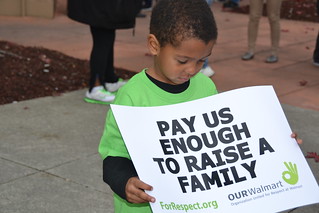
11.21.2012
two pieces of good news: a ceasefire in gaza, and the megaquarry is stopped

And the air strikes on Gaza ends with a brokered ceasefire. I'm amazed and very relieved.
friday in the u.s.: support walmart workers
This Friday, on the biggest shopping day of the year (also known as International Buy Nothing Day), hundreds of courageous Walmart workers will stand up to their bullying employer and demand their right to organize, free of retaliation.
The workers of Organization United for Respect at Walmart - OUR Walmart - already have begun striking and demonstrating at Walmarts in 23 states. On Friday, November 23, the day after US Thanksgiving, strikes, pickets, and in-store actions will take place at Walmart stores throughout the United States.
Walmart workers have been organizing to fight oppressive conditions in their workplace, and Walmart - the single biggest employer in the US, after the military - has been harassing and intimidating them. Now these workers are exposing Walmart's illgeal retaliatory practices and standing up for their right to organize.
You can help!
1. Don't shop at Walmart! And especially don't shop at Walmart on Friday, November 23.
2. Sign the declaration of support for the workers of OUR Walmart.
3. Read the stories of Walmart workers who have come together to share information and organize themselves.
4. Join the movement and find out what you can do locally to support Walmart workers.
These workers are very brave, standing up to their behemoth of an employer during very difficult economic times. Their fight is every worker's fight. Please do what you can.
The workers of Organization United for Respect at Walmart - OUR Walmart - already have begun striking and demonstrating at Walmarts in 23 states. On Friday, November 23, the day after US Thanksgiving, strikes, pickets, and in-store actions will take place at Walmart stores throughout the United States.
Walmart workers have been organizing to fight oppressive conditions in their workplace, and Walmart - the single biggest employer in the US, after the military - has been harassing and intimidating them. Now these workers are exposing Walmart's illgeal retaliatory practices and standing up for their right to organize.
You can help!
1. Don't shop at Walmart! And especially don't shop at Walmart on Friday, November 23.
2. Sign the declaration of support for the workers of OUR Walmart.
3. Read the stories of Walmart workers who have come together to share information and organize themselves.
4. Join the movement and find out what you can do locally to support Walmart workers.
These workers are very brave, standing up to their behemoth of an employer during very difficult economic times. Their fight is every worker's fight. Please do what you can.
saturday across canada: end the siege of gaza
This Saturday, across Canada and around the world, people will gather to condemn Israel's massacre of Gaza. The call:
The Canadian government has failed to condemn Israel's latest attack on Gaza. Instead, it provides Israel with the military, economic and diplomatic support necessary to carry out its acts of aggression. We call on all people of conscience to join the international Boycott, Divestment and Sanctions movement against Israel until it complies with international law.
And on Saturday, please join us for a city-wide rally and march in solidarity with Gaza. Tell Stephen Harper and the Canadian government: end your support for Israel's war. Show the people of Gaza and all of Palestine that we stand in solidarity with them.
Organized by:
Canadian Arab Federation
Canadian Peace Alliance
Coalition Against Israeli Apartheid
Independent Jewish Voices – Canada
Palestine House
Toronto Coalition to Stop the War
More information:
Mainstream media fails to report on atrocities against Gaza
Ten things you need to know about Gaza
Top ten myths about Israeli attack on Gaza
Counting bodies in Gaza: This is what Israeli 'self-defense' looks like
As Israel assaults Gaza, BBC reporting assaults the truth
Gaza situation report, November 19: United Nations Relief and Works Agency
In photos: Israel attacks Gaza
Stop Israel's war on Gaza!
Stop the killing. End the blockade. Free Palestine. Support BDS.
In Toronto:
Rally & March
Saturday, November 24 at 2:00 p.m.
Israeli Consulate, 180 Bloor Street West
TTC: St. George or Museum
For listings across Canada, see the Canadian Peace Alliance.
Facebook event
Stop the killing. End the blockade. Free Palestine. Support BDS.
In Toronto:
Rally & March
Saturday, November 24 at 2:00 p.m.
Israeli Consulate, 180 Bloor Street West
TTC: St. George or Museum
For listings across Canada, see the Canadian Peace Alliance.
Facebook event
The Canadian government has failed to condemn Israel's latest attack on Gaza. Instead, it provides Israel with the military, economic and diplomatic support necessary to carry out its acts of aggression. We call on all people of conscience to join the international Boycott, Divestment and Sanctions movement against Israel until it complies with international law.
And on Saturday, please join us for a city-wide rally and march in solidarity with Gaza. Tell Stephen Harper and the Canadian government: end your support for Israel's war. Show the people of Gaza and all of Palestine that we stand in solidarity with them.
Organized by:
Canadian Arab Federation
Canadian Peace Alliance
Coalition Against Israeli Apartheid
Independent Jewish Voices – Canada
Palestine House
Toronto Coalition to Stop the War
More information:
Mainstream media fails to report on atrocities against Gaza
Ten things you need to know about Gaza
Top ten myths about Israeli attack on Gaza
Counting bodies in Gaza: This is what Israeli 'self-defense' looks like
As Israel assaults Gaza, BBC reporting assaults the truth
Gaza situation report, November 19: United Nations Relief and Works Agency
In photos: Israel attacks Gaza
11.19.2012
a good-news, bad-news update: buddha, the brockways, and iraq war resisters in canada
Last month, I took a little road trip with a few friends from the War Resisters Support Campaign, to welcome a new baby and meet a new dog. This nice little visit would be unremarkable - if it weren't completely incredible. We visited the Brockway family.
Not that long ago, no one from the Campaign had met Jeremy Brockway. An Iraq War veteran, Jeremy suffered from severe anxiety, depression, and PTSD. He was unable to leave his room. He rarely shared a meal with his family or spent any time with his children. (More background: here and here.)
After hearing Ashlea Brockway speak in a Port Colborne church, Bruce Beyer, a peace activist and Vietnam-era war resister, connected the Brockways with a therapist. This doctor is himself a veteran who once struggled with PTSD. At no cost, on his own time, the doctor worked with the Brockways via Skype. And so began the gradual return to life of this wounded veteran and his young family.
Ashlea read a story about service dogs for people with PTSD and did some research. The War Resisters Support Campaign helped with some seed money, and before long, our fundraising efforts began. Allan picked up the story on his blog, and Joy of Sox readers gave generously. Now Buddha is a certified service dog and a member of the Brockway family. Jeremy and Buddha go everywhere together. And Jeremy and Ashlea and their children are a family again.
And so, on that sunny day in October, my friends and I met three Brockways for the first time - baby Alden, canine Buddha, and loving dad and husband, Jeremy. Alden is beautiful, Buddha is adorable, Ashlea is amazing, and the family is altogether wonderful.
I thought a camera would be intrusive, so this is a photo Ashlea sent.

That's the good news.
The bad news is the Brockways don't know what will happen to the life that they've struggled to build. That's the big question that hangs over this family - and all US war resisters in Canada. What will happen to them?
Ashlea and Jeremy Brockway have three children, and Jeremy is in treatment for a serious condition. But will that be enough for the Harper Government to show compassion, to respect Canadian tradition, and let them stay?
Recent history offers an answer: war resister Kimberly Rivera is being held at Fort Carson, Colorado, awaiting court martial, while her husband and their four children are in Texas. The Riveras were forced to leave Canada by a heartless government that has abandoned Canada's tradition of giving refuge to people fleeing unjust wars.
But the Brockways' struggle continues. Their case is still pending. Many other US war resisters also wait for an answer to this question.
None of us know what will happen to U.S. war resisters in Canada. But I know one thing: the fight is not over.
Not that long ago, no one from the Campaign had met Jeremy Brockway. An Iraq War veteran, Jeremy suffered from severe anxiety, depression, and PTSD. He was unable to leave his room. He rarely shared a meal with his family or spent any time with his children. (More background: here and here.)
After hearing Ashlea Brockway speak in a Port Colborne church, Bruce Beyer, a peace activist and Vietnam-era war resister, connected the Brockways with a therapist. This doctor is himself a veteran who once struggled with PTSD. At no cost, on his own time, the doctor worked with the Brockways via Skype. And so began the gradual return to life of this wounded veteran and his young family.
Ashlea read a story about service dogs for people with PTSD and did some research. The War Resisters Support Campaign helped with some seed money, and before long, our fundraising efforts began. Allan picked up the story on his blog, and Joy of Sox readers gave generously. Now Buddha is a certified service dog and a member of the Brockway family. Jeremy and Buddha go everywhere together. And Jeremy and Ashlea and their children are a family again.
And so, on that sunny day in October, my friends and I met three Brockways for the first time - baby Alden, canine Buddha, and loving dad and husband, Jeremy. Alden is beautiful, Buddha is adorable, Ashlea is amazing, and the family is altogether wonderful.
I thought a camera would be intrusive, so this is a photo Ashlea sent.

That's the good news.
The bad news is the Brockways don't know what will happen to the life that they've struggled to build. That's the big question that hangs over this family - and all US war resisters in Canada. What will happen to them?
Ashlea and Jeremy Brockway have three children, and Jeremy is in treatment for a serious condition. But will that be enough for the Harper Government to show compassion, to respect Canadian tradition, and let them stay?
Recent history offers an answer: war resister Kimberly Rivera is being held at Fort Carson, Colorado, awaiting court martial, while her husband and their four children are in Texas. The Riveras were forced to leave Canada by a heartless government that has abandoned Canada's tradition of giving refuge to people fleeing unjust wars.
But the Brockways' struggle continues. Their case is still pending. Many other US war resisters also wait for an answer to this question.
None of us know what will happen to U.S. war resisters in Canada. But I know one thing: the fight is not over.
Subscribe to:
Posts (Atom)