6.09.2008

"soldiers who will do almost anything not to go back"

A reader sent me this story from Newsweek.
As an internist at New York's Mount Sinai Hospital, Dr. Stephanie Santos is used to finding odd things in people's stomachs. So last spring when a young man, identifying himself as an Iraq-bound soldier, said he had accidentally swallowed a pen at the bus station, she believed him. That is, until she found a second pen. It read 1-800-GREYHOUND. Last summer, according to published reports, a 20-year-old Bronx soldier paid a hit man $500 to shoot him in the knee on the day he was scheduled to return to Iraq. The year before that, a 24-year-old specialist from Washington state escaped a second tour of duty, according to his sister, by strapping on a backpack full of tools and leaping off the roof of his house, injuring his spine.

Such cases of self-harm are a "rising trend" that military doctors are watching closely, says Col. Kathy Platoni, an Army Reserve psychologist who has worked with veterans of Iraq and Afghanistan. "There are some soldiers who will do almost anything not to go back," she says. Col. Elspeth Ritchie, the Army's top psychologist, agrees that we could see an uptick in intentional injuries as more U.S. soldiers serve long, repeated combat tours, "but we just don't have good, hard data on it." Intentional-injury cases are hard to identify, and even harder to prosecute. Fewer than 21 soldiers have been punitively discharged for self-harm since 2003, according to the military. What's worrying, however, is that American troops committed suicide at the highest rate on record in 2007 — and the factors behind self-injury are similar: combat stress and strained relationships. "It's often the families that don't want soldiers to return to war," says Ritchie.

Soldiers have long used self-harm as a rip cord to avoid war. During World War I, The American Journal of Psychiatry reported "epidemics of self-inflicted injuries," hospital wards filled with men shot in a single finger or toe, as well as cases of pulled-out teeth, punctured eardrums and slashed Achilles' heels. Few doubt that the Korean and Vietnam wars were any different. But the current war — fought with an overtaxed volunteer Army — may be the worst. "We're definitely concerned," says Ritchie. "We hope they'll talk to us rather than self-harm."

No one wants to die for someone else's profit. And few people want to kill innocent civilians who have done them no harm.

Supporting military resistance saves lives.

6.08.2008

watch tv tomorrow morning

Canadian readers who can watch TV in the morning, check out Canada AM on CTV tomorrow, Monday, June 9, at 8:40 a.m.

Iraq War resister Phil McDowell and Charley Richardson of Military Families Speak Out will be featured. It could be an important opportunity to bring our point of view to the public.

harriet mcbryde johnson

Harriet McBryde Johnson - lawyer, author, activist, mover-and-shaker, person with disability - died this week at the young age of 50.

McBryde Johnson famously debated philosopher Peter Singer in 2001, and wrote about it for the New York Times Magazine, among other places.
Rolling into an auditorium at the College of Charleston on April 22, 2001, Ms. Johnson went to the microphone during a question-and-answer session to confront Peter Singer, a philosopher from Princeton, who was giving a lecture titled "Rethinking Life and Death."

Professor Singer had drawn protests by insisting that suffering should be relieved without regard to species. That, he said, allows parents and doctors to kill newborns with drastic disabilities, like the absence of higher brain function or an incompletely formed spine, instead of letting "nature take its course."

In Professor Singer's view, infants, like other animals, are neither rational nor self-conscious.

"Since their species is not relevant to their moral status," he said, "the principles that govern the wrongness of killing nonhuman animals who are sentient but not rational or self-conscious must apply here, too."

Ms. Johnson had been sent to the lecture by Not Dead Yet, a national disability-rights organization. Describing the event in The Times, she wrote: "To Singer, it's pretty simple: disability makes a person 'worse off.' Are we 'worse off'? I don't think so."

(By the way, Peter Singer's position on disability is the reason I could never accept his views on the ethics of eating meat.)

This obituary in New Mobility speaks to McBryde Johnson's importance to people with disabilities, and to human rights and equality.
Harriet McBryde Johnson, an irrepressible voice for disability rights, died unexpectedly the morning of June 4, in her sleep. A disability and civil rights attorney who lived and practiced in Charleston, S.C., Johnson was also a gifted writer whose latest works had won her critical acclaim and a growing mainstream audience. She was 50 years old.

Her friend and fellow attorney, Susan Dunn, said Johnson had worked on June 3. "It's a shock to everybody," she said in the June 5 edition of the Post and Courier. The Charleston newspaper also quoted State Supreme Justice Jean Toal, characterizing Johnson as a titanic figure in state legal history, and her father, David D. Johnson, as saying he had spoken with her by phone the night before she died. "I'm a little stunned right now. I don't know what happened. I'm just in mourning," he said.

New Mobility readers will remember Johnson for her signature articles, among them her personal account of her trip to Cuba in 1997 to attend the Second International Conference on the Rights of People with Disabilities. "I can't help being impressed by this ramshackle society tackling the biggest social problems under the most trying circumstances," she concluded.

Her life was marked by an overriding concern for and commitment to defending human rights. Besides being a practicing attorney, Johnson was a well-known political figure in the Charleston area, having served as chair of the Democratic Party executive committee from 1988 to 2001. In 1996 she was a delegate to the Democratic Party National Convention. But it was in her two decades-long opposition to the "pity tactics" of Jerry Lewis' Muscular Dystrophy Telethon that she began to gain national attention as a voice for the dignity of people with disabilities.

Her crowning achievement as a writer may have come with the publication of the February 16, 2003 cover story for the New York Times magazine, in which she described her series of public debates and letter exchanges with controversial Princeton bioethicist, Peter Singer. In that essay, "Unspeakable Conversations," she put forth the seminal disability issue of our time, the right to exist, while exposing the questionable ethics of Singer with her wit and intellect, Southern manners, and her extraordinary writing ability.

"At this stage of my life, I'm Karen Carpenter thin, flesh mostly vanished, a jumble of bones in a floppy bag of skin," she wrote. "To keep myself upright, I lean forward, rest my rib cage on my lap, plant my elbows beside my knees. Since my backbone found its own natural shape, I've been entirely comfortable in my skin."

Johnson was chosen New Mobility's 2003 Person of the Year for persuasively challenging "the myth that people with disabilities are of inherently less value than nondisabled people." In March, 2006, she spoke at the U.S. Holocaust Memorial Museum on "Deadly Medicine," a disability rights perspective on the Nazi "euthanasia" program, which resulted in the gassing of hundreds of thousands of people with disabilities.

Johnson was a familiar figure in Charleston, having lived there since the age of 10. Besides her father, she is survived by her mother, Ada A. Johnson, her sister, Ada A. Johnson, and three brothers, David McBryde Johnson, Eric Austin Johnson and Ross L. Johnson.

Thank you, Harriet. You will be remembered, and always missed.

wmtc3: a success

We had a great day! Lots of people came, about half Campaigners (including two couples who are resisters) and about half other friends of ours. Everyone seemed to have a really good time.

It was hot, but the backyard is shaded in the afternoon and it didn't rain. I did learn that our backyard isn't really big enough for volleyball. People played - but some of them ended up hopping over fences to retrieve the ball from our neighbours' gardens - many times!

The dogs - our two and their two friends - were big hits. Two other dogs hung out in the basement, apparently friendly to people but not their own species.

After everyone ate and drank for a while, I gave a brief spiel about the war resisters. A lot of people watched "Let Them Stay", a short film produced by Alex Lisman for the Campaign. People bought books and t-shirts, dug into their wallets, and pulled out their chequebooks. After everyone left, I counted the money; to my astonishment, we raised around $600! That well exceeded my expectations.

Bloggers and commenters who attended: M@ (with partner), Tom and Emilio, Kim_in_TO, James and L, Nancy (who moved to Canada a week ago!), Ferdzy, a brief appearance by Nick (get well soon, Cian!) and Gito and Mr. Tew. (A special appearance by Idealistic Pragmatist was cancelled due to illness.) Several other wmtc readers who don't blog were there, plus most of the Campaigners.

Overnight guests are still here: my brother and sister-in-law from New Jersey, and Ray and Lindy from Vermont. Now I have to make sure folks get coffee and bagels!

Update: Recount! We raised more than $700! Whoo-hoo!

6.07.2008

wmtc3

It's today! People will be arriving in an hour or so. And it's not raining. Yay!

6.06.2008

stephen harper: "the prime minister has the moral responsibility to respect the will of the house"

On April 13, 2005, during Question Period, Stephen Harper, then the Leader of the Opposition, said:
Mr. Speaker, last night the House voted to hold a public inquiry into the Air-India tragedy. In fact, members representing every party in this House voted for that motion. The Prime Minister has the moral responsibility to respect the will of the House and the wishes of the families.

Will the Prime Minister respect this vote and immediately call a public inquiry into the Air-India tragedy?

Emphasis added.

Mr. Harper, will the Prime Minister respect this vote and immediately implement a program to allow conscientious objectors and their immediate family members to apply for permanent resident status and remain in Canada; and immediately cease any removal or deportation actions against such individuals?

Don't forget to ask him.

Ask him daily: 613.992.4211 / pm@pm.gc.ca.

our day in ottawa: a few photos

I've updated this post with some photos from our day. Thanks to Charlotte for the photos.

amnesty international statement in support of iraq war resisters in canada

I don't have a link for this yet; I received it by email. Public Statement from Amnesty International:
USA: James Corey Glass has right not to serve in Iraq

Amnesty International believes James Corey Glass to have a genuine conscientious objection to serving as a combatant in the US forces in Iraq, and would consider him to be a prisoner of conscience if imprisoned on his return to the USA. He is facing deportation from Canada on 12 June.

James Glass joined the army in 2002, enlisting in the National Guard where he was assigned to non-combatant duties in the USA. His unit was later ordered to deploy to Iraq, where he served five months of active service in 2005.

According to his statement, he had concerns about the legality of the war before his deployment to Iraq. While serving there, he developed further serious objections to the war, including what he saw as the abusive treatment of civilians by the US military and failure within the system to address such abuses. He stated that, whilst in Iraq, he reported his concerns to his superiors and asked to be relieved of duty. His request was denied but he was granted a two-week leave. He refused to return to his unit and went absent without leave (AWOL) in February 2006.

Since being in Canada, James Glass has become a member of the "War Resisters [Support] Campaign" and has spoken out publicly about his objection to the Iraq war.

US law recognizes the right to conscientious objection only on grounds of opposition to war in any form. James Glass was therefore unable to seek a claim for discharge from the army on grounds of his objection to the Iraq War. Other similar cases where US soldiers have sought to register their conscientious objection and apply for non-combatant status have been turned down.

If returned to the USA he faces a possible court-martial, where he could be imprisoned for between one and five years.

Background Information

Some US military personnel who have refused to deploy to Iraq or Afghanistan due to their conscientious objection to US policy and practice in the "war on terror" have been imprisoned solely for their beliefs. Amnesty International has considered some to be prisoners of conscience who should be released immediately and unconditionally.

Some of these conscientious objectors have been court-martialled and sentenced despite pending applications for conscientious objector status, others were imprisoned after their applications were turned down on the basis that they were objecting to particular wars rather than to war in general.

Amnesty International has declared a number of conscientious objectors in the USA to be prisoners of conscience. They included Camilo Mejia, who was sentenced to one year's imprisonment for his objections to the war in Iraq, and Abdullah Webster, who refused to participate in the same war due to his religious beliefs. Another, Kevin Benderman, was sentenced to 15 months' imprisonment after he refused to re-deploy to Iraq because of the scenes of devastation he witnessed there. Agustín Aguayo was sentenced to eight months’ imprisonment for his refusal to participate in the war in Iraq. All four have since been released.

Amnesty International is of the view that the right to refuse to perform military service for reasons of conscience is inherent in the notion of freedom of thought, conscience and religion as recognised in Article 18 of the Universal Declaration of Human Rights (UDHR) and Article 18 of the International Covenant on Civil and Political Rights (ICCPR).

Amnesty International considers a conscientious objector to be any person who, for reasons of conscience or profound conviction, refuses either to perform any form of service in the armed forces or applies for non-combatant status. This can include refusal to participate in a war because one disagrees with its aims or the manner in which it was being waged, even if one does not oppose taking part in all wars.

Wherever such a person is detained or imprisoned solely for these believe, Amnesty International considers that person to be a prisoner of conscience. AI also considers conscientious objectors to be prisoners of conscience if they are imprisoned as a consequence of leaving the armed forces without authorization for reasons of conscience, if because of those reasons; they have taken reasonable steps to secure release from military obligations.

6.05.2008

good story on our recent parliamentary victory

Excellent story about the House Of Commons vote on Bloomberg.com.
Canadian opposition lawmakers urged the government to freeze deportations of U.S. soldiers who fled to Canada after refusing to fight in Iraq, passing a non-binding resolution to pressure Prime Minister Stephen Harper.

Opposition parties with a majority of seats in Parliament asked the government to allow "conscientious objectors" to wars not sanctioned by the United Nations, such as the Iraq conflict, to apply for permanent resident status. The resolution urges the Conservative Party government to stop deportations ordered by immigration tribunals. The motion passed by 137 to 110, with the Conservatives voting against.

Harper, who came to power in 2006 promising improved relations with the U.S., hasn't tried to overturn any tribunal decisions ordering U.S. resisters deported. Today's vote conjures up controversial images from the Vietnam War era, when Canada took in thousands of Americans seeking to avoid being drafted or serving when called.

Read it here.

dunkin' donuts responds

In response to my complaint to Dunkin' Donuts regarding pulling the Rachael Ray ad because of rampant wingnuttery, I received this email:
Thank you for sharing your comments. We always appreciate hearing from our customers. The intent of the online ad featuring Rachael Ray wearing a paisley silk scarf was to promote iced coffee. Given the surprising and truly unfortunate interpretation of this ad from some of our consumers, we decided to pull the ad and replace it with another as it is no longer serving its intended purpose, which was to simply promote our iced coffee---nothing more, nothing less.

At Dunkin' Donuts, we value all of our customers and remain steadfastly committed to making your experiences with us both memorable and pleasant. Thank you, again, for making us aware of your concerns; it is appreciated.

Not bad. Basically, we don't need controversy, we need profit, so goodbye controversy. I like their characterization of the bigoted interpretation as "truly unfortunate"; I also like noting that the scarf was paisley.

Keep in mind that an innocuous, predictable response does not mean your message is not getting through. It's still worth complaining. And so easy!

seattle peace activists say "thanks, canada!"

Peace activists held a "Celebration Vigil" in front of the Canadian Consulate in downtown Seattle today. They were celebrating this week's vote in the House of Commons in support of Iraq War resisters in Canada.

Gerry Condon, a Vietnam-era war war resister and long-time anti-war activist, said:
We are here today to thank the Canadian people for providing shelter to our war resisters. You have provided them with homes, with food, with friendship, with legal representation and with political support. We especially want to thank the Canadian unions, churches, artists and activists who make up the War Resisters Support Campaign, which has worked so hard to ensure that war resisters are treated as refugees and not as criminals. Peace-loving people in the United States will be forever grateful.

But this will be a hollow victory if the Conservative government is allowed to flout the will of the Canadian people and act more like a surrogate for George Bush. We demand an end to deportation proceedings against Corey Glass and all war resisters.

Gerry runs Project Safe Haven, an advocacy group for Iraq War resisters. Project Safe Haven plans to present the Canadian Consul with a cake that says, "Thank You, Canada," and a t-shirt reading, "Support Our AWOL Troops."

Gerry again:
George Bush does not support our troops. He has lied to them, and he is using them as cannon fodder in a war that never should have happened. The taxpayers are paying billions of dollars for this war, much of it going to US corporations. But George Bush says we cannot afford a decent GI Bill.

Is it any wonder that opposition to the war is growing among active duty GIs? These brave Soldiers, Sailors, Marines and Airmen have the power to bring an end to the illegal U.S. occupation of Iraq.

Gerry, Canada thanks you back!

chris hedges and "collateral damage"

You'll recall that when I read Chris Hedges' modern classic War Is A Force That Gives Us Meaning, I couldn't stop posting about it. (Here, here, here and here.) It's a gripping, stomach-churning and eye-opening account of the psychology and reality of war.

Hedges has a new book, Collateral Damage - America's War Against Iraqi Civilians, co-authored by Laila al-Arian. TomDispatch describes it "two-person version of . . . Winter Soldier".

You can read an extended excerpt here. I'd warn you not to read this before sleep, or while you're eating, or anytime you don't want to cry.

When you support military resistance, you are supporting people who said no to this horror, and who said yes to peace.

wmtc3 minus 2 and counting

Two days until our party/fundraiser. Time to start obsessing on the weather and last-minute cancellations. (It's going to rain! No one's going to show up! A disaster!)

Just kidding.

Sort of.

Ten days until we leave for Newfoundland. On the bus up to Ottawa, I sat with a Campaigner who is a Newfie and learned lots of fun stuff. Guess what? We don't fly back from Deer Lake. We fly back from Deer Lake.

And of course, that's in Newfoundland. Rhymes with understand.

how the us supports its troops

What about the Iraq War veterans still in the US? How are they doing? (All emphasis added.)

Eighteen American war veterans kill themselves every day. One thousand former soldiers receiving care from the Department of Veterans Affairs attempt suicide every month. More veterans are committing suicide than are dying in combat overseas.

These are statistics that most Americans don't know, because the Bush administration has refused to tell them. Since the start of the Iraq War, the government has tried to present it as a war without casualties.

In fact, they never would have come to light were it not for a class action lawsuit brought by Veterans for Common Sense and Veterans United for Truth on behalf of the 1.7 million Americans who have served in Iraq and Afghanistan. The two groups allege the Department of Veterans Affairs has systematically denied mental health care and disability benefits to veterans returning from the conflict zones.

And:
Within a six-week period in 2002, three Special Forces sergeants returned from Afghanistan and murdered their wives at Fort Bragg in North Carolina. Two immediately turned their guns on themselves; the third hanged himself in a jail cell. A fourth soldier at the same Army base also killed his wife during those six weeks.

At the beginning of this wartime period, the cluster of murder-suicides set off alarms about the possible link between combat tours and domestic violence, a link supported by a study published that year in the journal Military Medicine. The killings also reinvigorated the concerns about military domestic violence that had led to the formation of the Defense Task Force on Domestic Violence two years earlier.

National attention to the subject was short-lived. But an examination by The Times found more than 150 cases of fatal domestic violence or child abuse in the United States involving service members and new veterans during the wartime period that began in October 2001 with the invasion of Afghanistan.

. . . .

Connie Sponsler-Garcia, another task force member, who now works on domestic violence projects with the Pentagon, agreed.

"Whereas something was a high priority before, now it's: 'Oh, dear, we have a war. Well get back to you in a few months,'" she said.

The fatalities examined by The New York Times show a military system that tries and sometimes fails to balance the demands of fighting a war with those of eradicating domestic violence.

According to interviews with law enforcement officials and court documents, the military has sent to war service members who had been charged with and even convicted of domestic violence crimes.

Deploying such convicted service members to a war zone violates military regulations and, in some cases, federal law.


Take the case of Sgt. Jared Terrasas. The first time that he was deployed to Iraq, his prosecution for domestic violence was delayed. Then, after pleading guilty, he was pulled out of a 16-week batterers intervention program run by the Marine Corps and sent to Iraq again.

Several months after Sergeant Terrasas returned home, his 7-month-old son died of a brain injury, and the marine was charged with his murder.

Deployment to war, with its long separations, can put serious stress on military families. And studies have shown that recurrent deployments heighten the likelihood of combat trauma, which, in turn, increases the risk of domestic violence.

"The more trauma out there, the more likely domestic violence is," said Dr. Jacquelyn C. Campbell, a professor at the Johns Hopkins School of Nursing who also was a member of the Pentagon task force.

The Times examined several cases in which mental health problems caused or exacerbated by war pushed already troubled families to a deadly breaking point.

In one instance, the Air Force repeatedly deployed to Iraq, Afghanistan and elsewhere Sgt. Jon Trevino, a medic with a history of psychological problems, including post-traumatic stress disorder.

Multiple deployments eroded Sergeant Trevino's marriage and worsened his mental health problems until, in 2006, he killed his wife, Carol, and then himself.

The military declared his suicide "service related."

And:
U.S. Air Force Technical Sergeant Jeffrey VerSteegh, who repairs F-16 jets for the 132nd Fighter Wing, departed Des Moines, Iowa, in April for his third tour in Iraq. The father of four may lose his home when he returns.

The four-bedroom farmhouse he and his wife, Kathleen, own near the Iowa State Fairgrounds went into default in December after their monthly mortgage costs doubled to $1,100. Kathleen missed work because of breast cancer and they struggled to keep up the house payment, falling behind on other bills. Their bankruptcy was approved by the court a week after VerSteegh left for Iraq.

In the midst of the worst surge in mortgage defaults in seven decades, foreclosures in U.S. towns where soldiers live are increasing at a pace almost four times the national average, according to data compiled by research firm RealtyTrac Inc. in Irvine, California. As military families like the VerSteeghs signed up for the initial lower rates and easier terms of subprime mortgages, the number of people taking out Veterans Administration loans fell to the lowest in at least 12 years.

"We've never faced a situation like this, not in the Vietnam War, World War II, or the Korean War, where so many military are in danger of losing their homes," said Paul Sullivan, executive director of Veterans for Common Sense, a Washington-based advocacy group started in 2002 by Iraq and Afghanistan War veterans. "No one asked them for their credit score when we asked them to fight for us."

War Resister Corey Glass has been widely quoted as saying he joined the National Guard to help people in times of emergency, that he should have been filling sandbags in Louisiana, but instead was shipped to Iraq.

While the US is draining its people's tax dollars to protect KBR shareholders, what about those people Corey wanted to help? Many of them are still homeless - or about to be.
Joe Stevens used to be a commercial fisherman - until diabetes took his legs.

He used to have a daughter - until her suicide left him caring for two of her three children.

He used to have a house in the Lyman community - until a tornado spun from Hurricane Katrina took that too.

Stevens, 52, now is facing the loss of the mobile home he has been living in for the better part of two years.

The Federal Emergency Management Agency is working to draw its emergency-housing program to a close by March 2009, but some deadlines are earlier. Stevens said he was told he had until today to find an apartment, although FEMA officials deny threatening anyone with that deadline.

"They are trying to get us out of here," Stevens said. "I'm just having trouble getting up a deposit."

It has been 33 months since Hurricane Katrina hit the Mississippi Gulf Coast. Much has been accomplished since that day, Aug. 29, 2005, but the toughest part of the recovery lies ahead.

There are 6,334 FEMA trailers and mobile homes still in use on the Coast, housing about 16,600 people. Approximately 1,200 others are in motel rooms, having been moved out of trailers by FEMA because of high formaldehyde levels.

As the Coast enters its third hurricane season since Katrina, advocates say those without a permanent home are most vulnerable.


An analysis of FEMA households at the beginning of May by the Back Bay Mission, a faith-based organization assisting Katrina survivors on the Coast, found that 82 percent of occupants made below-average income and one in three were over 60, had special needs or both.

Dena Wittman of Back Bay said many of them have been left out of the recovery.

"It's those with the lower incomes, those who are on fixed incomes who often are disabled, and those who are the working poor who essentially were able to make it without any type of subsidies from the government prior to Katrina," she said. "They are not able to afford to live in their communities now."

Wittman said housing prices have risen 40 percent since the storm but salaries have not. Add to that higher food and gas prices, and the situation has gotten worse.

Looking at this from another angle, is it any wonder that people living under these conditions join the military in order to get food, shelter and healthcare?

Canada needs to stand behind the people who managed to break free of this terrible cycle of forced poverty and violence. And in fact, Canada has already spoken: we want to be a refuge from militarism. Put it on your daily to-do list to call Stephen Harper and Diane Finley.

Remind them that Canada is a democracy. They're supposed to carry out the will of the people, and that is: Let Them Stay. Details here.

6.04.2008

the day in ottawa

Although wmtc has become Resister Central, it is also still my personal blog, and the only place I record my observations of my world. So if some newer readers who have come over from the War Resister Support Campaign website thinking "wtf?" about this post, at least long-time readers will understand.

Allan gave you the run-down of the day while I was gone; now I'll fill in the blanks.

I almost had nothing to report: a lane closure on the Gardiner almost made me miss the bus! That was a little hairy, but Allan got me to 25 Cecil Street before the bus pulled away - and I was grateful to learn I wasn't the last one to get on. Thankfully a resister family with children showed up a bit later, and you know we weren't leaving without them!

On the ride up, people were tense. The younger resisters were joking around, but the banter sounded strained. The older resisters were quiet. Campaigners were more buoyant, but everyone was nervous.

One of my favourite things about this Campaign is how multigenerational it is. On the bus I had an opportunity to connect with one of our elder campaigners, a Quaker who has housed several resisters. I would have thought he was old enough to be my father, but I learned I am the same age as his grandchildren.

This man has been an activist all his life. On the same bus are former soldiers just out of high school, getting their first taste of working for change. And everyone else on the bus spans the ages in between.

We were told if we got there before 1:30, we would get into Question Period. The gallery was expected to be packed, so there was an overflow room set up in Jack Layton's office where we could also watch the proceedings on TV. Olivia Chow arranged passes for the members' gallery, where there would be more room than in the public gallery.

So we queued up, and waited. And waited. And waited. We weren't being allowed in, and we were starting to worry that the vote would go on while we were stuck in limbo.

Finally we were told there was only room for ten more people in the members' gallery, five from our group and five others. So five resisters - including Corey Glass and Josh Key (who came in from Saskatoon) went in - and the rest of us waited for Jack Layton's aide to get us upstairs.

But guess what? Later, at the pub, those guys told us there were two rows of empty seats in the Members Gallery. We were kept out.

Question Period ran late, and thank something, because we had barely squeezed in the two little board rooms when the vote was called. As you know, all our hopes hung on the Liberal Party, as we knew the NDP and the Bloc were on our side. When Stéphane Dion stood up, a huge whoop went up, and the same for Ignatieff.

It was very hard to sit through all the Tory nays. They seemed to go on for a very long time. Harper wasn't there for the vote. (Neither were some of our key Liberal supporters. We don't yet know why.)

And then, we won! And then the business of Parliament resumed. Just like that. We won.

People hugged and cried, but honestly, it was a little muted. I think people were stunned, and exhausted, and even a little confused. My friend Jamine Aponte, who is married to war resister Phil McDowell, was sobbing uncontrollably.

From there we went to the senate room, where Olivia Chow - who I call the Patron Saint of the Resisters - had a reception prepared for us. (She joked that the war resisters had taken over the Senate.) That's when I called Allan, so I was able to report to the campaign that wmtc had the news up immediately, and the Canada News Wire story had appeared within minutes of the vote.

Olivia spoke briefly, as did Meili Faille, our champion in the Bloc Québécois. Campaign coordinator Lee Zaslofsky acknowledged our supporters and our guiding light Michelle Robidoux. (More on Michelle later.) Lee acknowledged a few resisters who had done extraordinary work - Josh Key and Phil and Jamine - then all the resisters in the room. Jack Layton also made a short statement, and presented a miniature of the House of Commons to the Campaign.

Olivia also had certificates of honourary Canadian citizenship for all the resisters, in leather-bound folders like a diploma. I haven't even gotten one of those yet!

From there, thankfully, we went to a nearby pub, the same place we celebrated after our Committee victory in December. Only then did I realize how tense and quiet people had been. Drinking and laughing with Phil and Jamine, I realized it had been weeks since I'd seen Phil smile. Corey's smile can light up a room, and when I saw how happy he looked, I swear I almost started to cry again. (How convoluted is that?) So we drank and laughed and savoured.

All but one of us, whose cell phone never left her ear, and who won't let herself stop to enjoy this, because more work remains on the horizon. But as I said, more on that later.

Then it was back on the bus. Turns out we didn't stop at the LCBO (although a flask made the rounds), but we'll have plenty of time to celebrate.

I called Allan from the bus and he was waiting for me on Cecil Street. The Campaign meets tomorrow night to plan a Saturday action in Port Dover, riding of one Diane Finley. I'll skip this meeting, because when the Port Dover action ends, everyone is coming to our house!

I have a big pile of things to blog about - non-resister topics, even - but this Saturday is wmtc3 and time is tight. Going up to Ottawa the week before our party wasn't exactly on my schedule! I'm not sure how much time I'll have to blog or what I'll be able to get up.

Thank you for reading, and my deepest thanks for your support.

* * * *

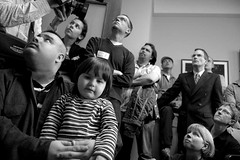
Here are a few photos from the day; click to enlarge.
war resisters house of commons 03
Nervously watching the vote.


war resisters house of commons 01
Looks like we're on the verge of a win here.


war resisters house of commons 06
Meili Faille and Olivia Chow address the group. The woman in the white jacket is Sue Barnes, Liberal MP from London, Ontario, who supports the Iraq War resisters in Canada.


war resisters house of commons 02
Olivia Chow with war resister Patrick Hart. Alex Atamanenko, NDP MP from British Columbia is in the background.


war resisters house of commons 04
Jamine Aponte and Phil McDowell. Phil volunteered for the army after 9/11. He was sent to Iraq, where he witnessed war crimes, and saw the reason for the invasion was a lie. After he was honourably discharged, Phil intended to separate from the army. But he was stop-lossed: involuntarily re-enlisted with no legal way out.


war resisters house of commons 07
A group of happy resisters.


war resisters house of commons 05
All the resisters who were able to go to Ottawa for the vote.


Many thanks to Charlotte for these terrific photos.

best. day. ever. (so far)

What a day! What a friggin wonderful day!

As you already know, we won our recent and long-fought-for battle. The House of Commons voted 137 to 110 to allow Iraq War resisters to stay in Canada.

Now one more piece of the puzzle remains: to persuade the Harper Government to carry out the will of the people.

As you know, the motion that passed yesterday is technically non-binding. It does not technically compel the Government to act.

I use that word "technically" because, if Canada is a democracy, the motion must be morally binding. Stephen Harper leads a minority government. He is not supposed to be a dictator. He is not supposed to have the final say.

In Canada, the final say is supposed to come from Parliament, the elected representatives of the Canadian people. And the majority of those elected representatives have now spoken.

So if we want to keep Corey Glass - and all his brother and sister resisters - safe and free in Canada, we must continue to work. We have a short window of opportunity before Corey's threatened deportation date, after which Parliament will rise. So we will be very busy.

Two things you can do right now.

First, please email or call your own MP. If she or he voted yes yesterday, say thank you. If she or he voted no, express your disappointment.

Second - and third, fourth, fifth - call Diane Finley, Minister of Citizenship and Immigration. You can do this every day. I sure will. You can call Mr. Harper's office, too.

Tell both Harper and Finley that you expect them to carry out the will of the Canadian people: to cease all deportation proceedings against Corey Glass and other Iraq War resisters, and to implement a program that will allow them to stay in Canada.

Minister of Citizenship and Immigration Diane Finley
613.996.4974
finley.d@parl.gc.ca / finled1@parl.gc.ca

Prime Minister Stephen Harper
613.992.4211
pm@pm.gc.ca

6.03.2008

parliament says: "let them stay!"

[Guest post from Allan/redsock]

The motion has passed!

The House of Commons has voted in favour of the resolution that demands the Harper government immediately cease all deportation proceedings against any Iraq War resisters currently in Canada and allow all resisters and their families to remain in Canada and apply for permanent residence.

Vote total announced as Yea: 137 & Nay: 110!!

It was a very simple procedure: The motion was read and then voted on. Yeas stood and were counted, then the Nays. The totals were announced, the speaker declared the motion passed, and they moved on to the next item.

***

First news item I found (posted 3:16 PM):

House of Commons votes to let U.S. War Resisters stay in Canada
OTTAWA, June 3 /CNW/ - The Opposition parties in the House of Commons joined together today to adopt a recommendation which, if implemented, would make it possible for U.S. Iraq War resisters to obtain Permanent Resident status in Canada.

The recommendation was adopted by a majority of Members of Parliament from the Liberal, Bloc Québécois, and New Democratic Parties. The Conservatives voted against the motion.

The motion, which originated in the House of Commons Standing Committee on Citizenship and Immigration in December 2007, calls on the government to "immediately implement a program to allow conscientious objectors and their immediate family members ... to apply for permanent resident status and remain in Canada; and ... the government should immediately cease any removal or deportation actions ... against such individuals."

Corey Glass, 25, a war resister who came to Canada in 2006 and was recently told to leave Canada by June 12 or face removal to the United States, welcomed the vote. "I'm thankful that the MPs voted to let me and the other war resisters stay in Canada. I'm also thankful to all the Canadians who urged their MPs to support us."

"This is a great victory for the courageous men and women who have come to Canada because they refuse to take part in the illegal, immoral Iraq War, and for the many organizations and individuals who have supported this campaign over the past four years," said Lee Zaslofsky, Coordinator of the War Resisters Support Campaign and a Vietnam War deserter who came to Canada in 1970.

The War Resisters Support Campaign is calling on the Conservative government to respect the democratic decision of the Canadian Parliament and immediately implement the motion and cease deportation proceedings against Corey Glass and other war resisters.

house of commons: watching the vote

[Guest post from Allan/redsock]

Laura is in Ottawa today with the rest of the Toronto members of the War Resisters Campaign for this afternoon's historic vote in the House of Commons to allow Iraq War resisters from the US to remain in Canada.

The three opposition parties have indicated that their members will vote Yes on the motion. If that happens, Harper's minority government, while in power, cannot defeat the motion. Once it passes, Harper has two choices: obey the motion or give a huge middle finger to Parliament and a clear majority of Canadian voters.

I'll be watching on CPAC (watch online here) and will provide running commentary in comments. Feel free to tune in and follow along!

This is the text of the motion:
The Committee recommends that the government immediately implement a program to allow conscientious objectors and their immediate family members (partners and dependents), who have refused or left military service related to a war not sanctioned by the United Nations and do not have a criminal record, to apply for permanent resident status and remain in Canada; and that the government should immediately cease any removal or deportation actions that may have already commenced against such individuals.

As I said in the thread below, I'm not sure if the vote is at 3 PM or if the session that will include the vote begins at that time. Either way, I'll be back at 3 PM.

house of commons votes today: let them stay!

Well, this is it. We're going up to Ottawa today to watch the historic vote. You can watch too, on CPAC if you get it, or here, at 3:00.

I'm so excited! My stomach is in knots. If I feel like this, I can only imagine what my friends the resisters are feeling, and the campaigners who have been working on this three times as long as me.

Thank you to everyone who made those phone calls yesterday. Allan will guest-post with updates. Stay tuned!

6.02.2008

bo diddley

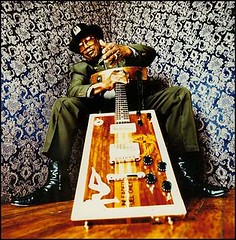
Rock pioneer Bo Diddley is dead at age 79.

Diddley never shied away from speaking about how African-American musicians of his generation were ripped off by producers and promoters.

His music was often imitated and built upon, but the man himself was a pure original. How many musicians have a beat named after them?

bodiddley